
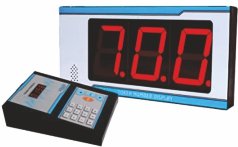
A token display system is a smart queue management solution designed to organize customer flow in places where waiting lines are common. From health care facilities and banks to government offices and retail outlets, effective mega–line management can significantly improve customer satisfaction. This system operate with assigning a token number to people and it gets displayed on the screen when their turn comes instead of standing in crowded lines. Simple, right? Yet, the impact is powerful.
So imagine you walk into a crowded service center and you never have to wonder when your turn will come. You get a token, settle down and wait for your number to pop. Well, that is the ease of a token display system. The process eliminates ambiguity, lowers anxiety and fosters a more tailored and structured atmosphere for consumers and employees alike.
How a Token Display System Works?
Core components of the token display system include both hardware and software. When a customer visits, he is issued with an token number manually or from an automated kiosk. This token as well goes into the queue which is managed by the system.
As service counters become available, staff members call the next token, and the number is displayed on digital screens along with the counter information. Some advanced systems even include voice announcements, ensuring that customers don’t miss their turn. It’s like having a digital assistant that keeps everything running smoothly behind the scenes.
The modern systems can also monitor the waiting times and provide real-time information, which makes it easier to enhance service efficiency. This empowers organisations to get peak hours, eliminate delays and better allocate its workforce.
Benefits of Token Display System:
A token display system provides several advantages beyond simply managing queues. It improves the experience for all parties.
Reduced waiting stress: Customers can relax instead of standing in long lines.
Better organization: Queues are processed in an orderly manner, rather than chaos.
Increase in efficiency: Customer handling becomes more systematized.
Improved Customer Experience: An easy process creates a good impression.
Reimagine it as turning a busy, noisy waiting hall into an organised and disciplined space flowing like clockwork.
Types of Token Display Systems
There are many most common types of token display system solutions present in the market based on simple nature and organization needs. Basic Systems– a basic system may comprise of simple LED displays that display token numbers. These are widely used in small clinics or local offices.
Some sophisticated systems utilize digital screens, touch-screen kiosks as well as integrated software that means multiple queues and prioritized servicing can occur. Hospitals, for example, can give priority to emergencies while banks can differentiate between queuers based on the services they require.
Now even wireless and cloud-based systems are gaining traction. They help businesses with queue management remotely while also notifying customers via SMS or mobile apps. Their flexibility makes them suitable for the fast-paced, technology-based environments that we have today.
Where are Token Display Systems Used?
Token display system is used in multiple industries Hospitals use them to control the patient flow, banks use them to manage customers in a timely manner, and retail outlets utilize them for billing and service processes.
These systems are also an integral part of government offices and service centers which have large crowds on a regular basis. Restaurants and food courts even have the token system when customers are notified that their orders are ready. It can be used virtually everywhere there is a line.
Conclusion
A token display system can do more than queue management; it can completely revolutionize the waiting experience. It is important in service environments that are modern, by minimizing confusion and improving efficiency as well as customer satisfaction. Businesses are leaning more on providing improved experiences and, as such, adopting smart solutions like this also is no longer an option; it is a need.
