
The pressure on hardware reliability has reached a bit of a fever pitch lately. Whether it’s a life-saving medical implant, a sensor for a satellite, or the guts of a modern EV, the environments these devices call home are getting nastier. For most of us in engineering or procurement, “failure is not an option” isn’t just a catchy phrase. It’s the reality of our lead times and liability. When a tiny component fails because of moisture or some random chemical corrosion, the fallout usually isn’t just a minor fix; it’s a full-blown recall or a safety nightmare.
As electronics get more crowded and parts get smaller, the old “good enough” approach to protection is basically dead in the water. This shift is why so many teams are obsessing over their choice of Parylene coating manufacturer. When you’re dealing with microns of thickness, that invisible layer is often the only thing keeping a system from bricking itself in the field.
It’s Not Just a Vendor, It’s a Partnership
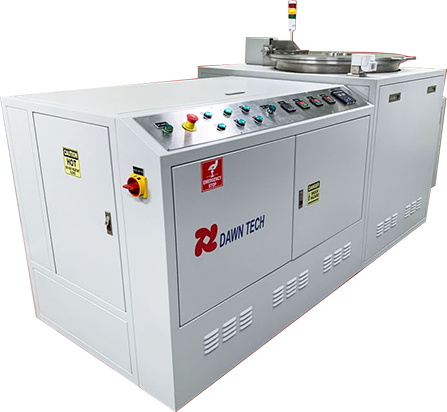
Here’s the thing about Parylene: it isn’t “painted” or sprayed like the stuff you’d see at a typical body shop. It’s applied through chemical vapor deposition (CVD). You’re essentially heating up a raw dimer until it turns into a gas, then letting it settle as a polymer film inside a vacuum chamber. Because it’s growing molecule by molecule, it gets into the tiny gaps and under-fills that liquid coatings wouldn’t dream of touching.
But that precision is a double-edged sword. There’s almost zero room for error. Picking the right Parylene coating manufacturer isn’t just about finding someone with the right machine; it’s about finding a team you trust to handle the “invisible” variables. Everything from how they prep the surface for adhesion to how they handle the nightmare of complex masking determines if that coating stays put or peels off when things get sweaty.
What Actually Makes a High-Quality Provider?
In this niche world, real expertise usually looks like “tribal knowledge.” A top-tier Parylene coating manufacturer stands out because of their process engineering—knowing exactly how to treat a delicate substrate that might freak out under vacuum pressure or the thermal swings of a deposition cycle.
The best shops also don’t just push one-size-fits-all solutions. While Parylene N and C do the heavy lifting for most projects, some environments demand a specialized toolkit. That’s where things like Parylene AF4 Polymer come into play. If you’re working in aerospace or automotive and you’re worried about high heat or constant UV exposure, AF4 is usually the answer. A manufacturer that can look at your specs and suggest AF4 instead of just nodding along with the standard dimer shows they actually get the material science behind the curtain.
Comparing the “Old Guard” Options
When you’re mapping out a protection strategy, it’s easy to get a quote from conventional coating suppliers who deal in acrylics, epoxies, or silicones. Those materials have their place, for sure. They’re fast, they’re cheap, and for a consumer remote control, they’re perfect.
But conventional coating suppliers can’t really solve the “shadowing” problem. When you spray or dip a board, the liquid tends to pool in some spots and leave sharp edges or deep corners nearly naked. In a rugged handheld, maybe that’s fine. But if that board is going into a salt-spray environment or an acidic industrial zone, those bare spots are basically an invitation for failure. Parylene bridges that gap, offering massive dielectric strength without adding any real weight.
What to Look for Before You Sign
Before you commit to a partner, I’d suggest looking past the fancy website and asking the awkward questions:
- The Certification Reality: Are they actually compliant with ISO 13485 or AS9100, or do they just “follow the guidelines”? In high-stakes industries, the paperwork is as important as the polymer.
- Chamber Real Estate: Can they actually handle your volume? Parylene is a batch process. If they only have two small chambers and you’re scaling up, your lead times are going to hurt.
- Testing Rigor: Do they do their own cross-sectional analysis or FTIR testing? You don’t want to be the one finding out the coating thickness is off during your own QC.
- Early-Stage Talk: The best results happen when you talk to the coating team while the board is still on the screen. Industry players like Dawn Tech often emphasize that a quick design tweak—like moving a connector a few millimeters can save thousands in masking costs later.
The Bottom Line
Technical datasheets tell one story, but the field tells another. The success of a coating usually comes down to whether the manufacturer actually understands the “why” behind your project. Companies like Dawn Tech are part of a broader move toward a consultative model, where the manufacturer acts like an extension of your own R&D shop.
As we build more autonomous systems and smarter infrastructure, these microscopic barriers are what will actually keep our tech alive. The most expensive coating is always the one that fails, which makes picking your Parylene coating manufacturer more of a risk-management exercise than a simple procurement task. Reliability isn’t really about how much coating you put on; it’s about the absolute integrity of that molecular bond.
