
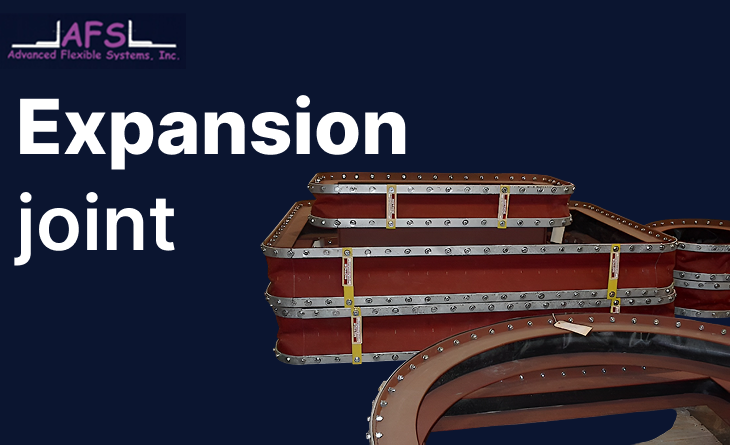
Expansion Joints are significant parts of piping and ducting systems where thermal, vibration, pressure fluctuation, and mechanical movement occur. If these flexible components did not exist, piping systems would likely develop cracks, leaks, or structural failure. Some of the most common types of elastomeric expansion joints include flue duct expansion joints, flanged and flued expansion joints, and high-temperature bellows joints. Each type has unique features, which make it best suited for its respective industrial applications.
Flue Duct Expansion Joints
Flue duct expansion joints are primarily designed expressly for the purpose of accommodating temperature variations due to heated liquids travelling through the pipes, ducts, and machinery that experience periodic high- and low-temperature exposure. These types of systems are typically used at industrial plants to move exhaust fumes, combustion by-products, or heated air streams.
Key Characteristics
Flue duct expansion joints possess a multi-layer construction. They are generally made up of various combinations of inorganic fabrics and insulation. The outer cover material is made from a fluoropolymer, typically PTFE (polytetrafluoroethylene), or a silicone-impregnated material. The layered construction provides the following characteristics:
- Excellent high-temperature resistance control
- Ability to resist corrosion, chemical resistance and moisture
- Ability to perform light-weight and flexible
Common Uses
Flue duct expansion joints are widely used in:
- Power generation plants
- Cement plants
- Steel mills
- Refineries and petrochemical facilities
- Pulp and paper mills
- Industrial boilers and scrubber systems
Flanged and Flued Expansion Joints
Metal flanged and flued expansion joints are large, durable expansion joints that are commonly found in heat exchangers or pressure vessels. The joints consist of two halves of the same shape that are made from flat annular plates. This style of expansion joint has the outer edges of each annular plate flanged outward and the inner edges of each annular plate flued inward. The connection between the two plates is accomplished by welding them together and then welding them directly into the heat exchanger or vessel shell.
Key Characteristics
The following are key characteristics of flanged and flued expansion joints:
- High structural integrity
- Thick wall construction
- Excellent resistance to mechanical abuse
- Long service life
The extra thickness of the foundation material gives flanged and flued expansion joints a high level of durability and strength and allows them to endure both internal pressure and mechanical shock, in addition to supporting external loads better than most other types of joint systems.
Common Uses
Flanged & Flued expansion joints are often used in:
1) shell & tube heat exchangers
2) pressure vessels
3) large industrial condensers
4) petrochemical processing Equipment
In heat exchanger applications, differential thermal expansion will occur between the shell & tube bundle due to the temperature difference (between the shell & tube bundle). The flanged & flued expansion joint will absorb this thermal stress, thus preventing the shell from cracking or distorting because of the thermal stress. Due to their durable construction, flanged & flued expansion joints are typically utilised in environments that pose a threat of structural damage or excessive internal pressure.
High-Temperature Expansion Bellows Joints
High-temperature expansion bellows are engineered to offer an exceptional degree of flexibility while still having the ability to withstand high-temperature applications. The joints are fabricated using metal bellows that are comprised of multiple thin stainless steel sheets that are corrugated or formed in a series of ridges. They are designed to compress, extend, or also flex in order to accommodate the movement of the system.
Key Features:
The most significant feature of a high-temperature expansion joint, compared to an expansion joint, is that they afford a large amount of flexibility due to the corrugated design of the bellows. As a result, the bellows can absorb the following types of movements:
- Axial movement (Compression and Expansion)
- Lateral movement
- Angular deflections
- Mechanical vibrations
High-temperature expansion joints are primarily manufactured from high-performance alloys, primarily stainless steel or other heat-resistant materials. This permits the expansion joints to be incorporated into systems that operate in extreme temperature conditions without compromising the physical integrity of the expansion joint.
Common Uses
High temperature Bellow Type Expansion Joints are used in the following applications:
- Gas Turbines
- Exhaust systems
- Industrial furnaces
- Chemical processing plants
- Power plant steam lines
- Aerospace and Heavy Industrial Applications
In High Temperature Steam or Exhaust systems there is considerable thermal growth that occurs and Bellows type Expansion Joints can absorb this movement without transferring stress to the associated equipment, anchors or supports.
Due to their ability to dampen vibrations in systems with rotating machinery, expansion joints are also useful for this applicatio
High Temperature Expansion Joints (General Category)
High-temperature expansion joints (HTEJ) refer to a variety of different types of joints made from several types of materials (metallic and non-metallic) capable of withstanding high temperatures and extreme thermal conditions.
Important Features
HTEJs are designed with the following features:
- Heat-Resistant Material
- Oxidation and Corrosive Resistance
- Ability to Handle Various Pressures
- Ability to Be Custom Designed for Custom Movement Absorption
HTEJs can be made using various types of materials, which are often determined based on the type of application they are to be used in. These materials can include stainless steel alloys, refractory fabrics (ceramic thermal insulation), PTFE (Polytetrafluoroethylene) or ceramic coating, and other common applications of HTEJ materials.
Common Uses
The types of expansion joints typically employed throughout Industrial Applications include the following:
– Flue gas systems
– Boiler connections
– Stack ducting
– Refinery processing lines
– High-pressure steam systems
The purpose of the expansion joint is to protect the integrity of the system by allowing for thermal growth, reducing the concentration of stress and preventing fatigue failure.
Summary
Each type of expansion joint has a specific function within industrial systems. Flue duct expansion joints provide lightweight, chemically resistant flexibility for exhaust and/or gas handling systems, whereas flanged and flued expansion joints are extremely robust and durable for use in pressure vessels and heat exchangers where the strength of the material far exceeds that of the flexibility of the joint. High-temperature expansion bellows joints provide superior movement absorption, as well as vibration control in environments that require the most demanding thermal performance. The criteria used to select the correct expansion joint will include the temperature range, pressure conditions, movement requirements, chemical exposure, and mechanical stress. Custom expansion joints designed and installed with great precision helps in enhancing the reliability, safety, and operational life of the system.
Looking for reliable performance in demanding thermal environments?
Advanced Flexible Systems Inc delivers precision-engineered flue duct expansion joints designed to handle extreme temperature fluctuations, corrosive flue gases, and continuous system movement. Our high-performance flue gas expansion joints and high temperature composite designs provide superior flexibility, durability, and long-term sealing integrity in power plants, refineries, and heavy industrial applications.
From rugged flanged expansion joints for pressure vessels to custom-engineered high temperature expansion joint solutions, we manufacture products built to perform under the toughest operating conditions.
