
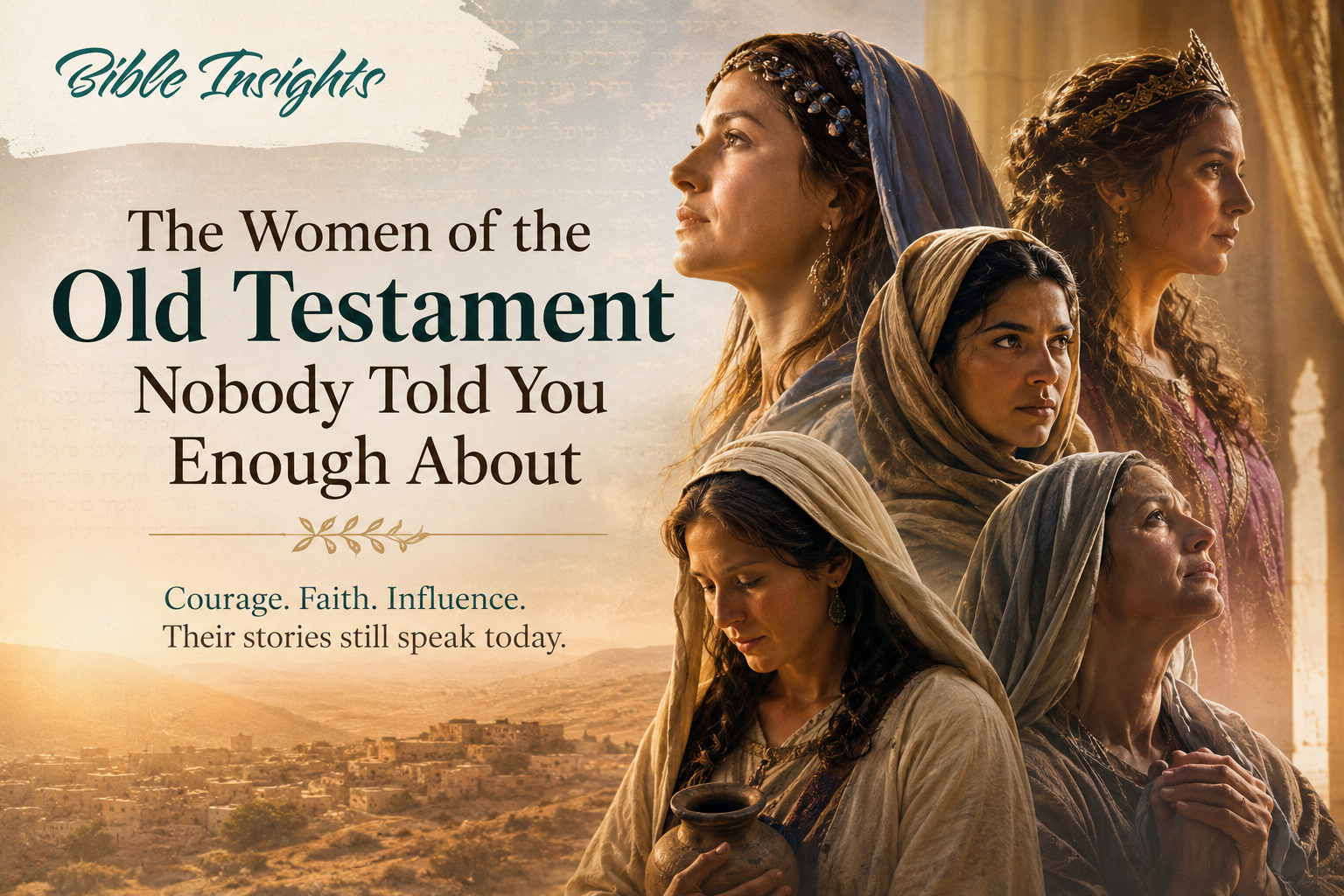
I grew up on the same handful of Bible stories everyone gets, Noah’s ark, David and Goliath, the greatest hits. Nobody really pointed me toward the Women of the Old Testament until much later, and honestly, once I actually sat down and read their stories in full, I felt a little cheated. These weren’t side characters. Several of them changed the direction of entire nations, and their lives still hold up against whatever you’re dealing with right now, oddly enough.
Part of it is how these stories get taught. A verse mentioned in passing, a name dropped in a sermon illustration, rarely the whole arc. Sit with the actual text for a while though, and something shifts. You start noticing courage that doesn’t make a big show of itself. Leadership that shows up without waiting for someone to hand out permission. Faith that holds under pressure most of us, thankfully, will never have to face.
Influence Without Formal Power
Ancient Israelite society wasn’t exactly generous with handing women public authority. Worth saying that plainly. And yet, over and over, the Women of the Old Testament find ways to shape outcomes that mattered enormously.
Deborah is the obvious example, but people underplay just how much she actually did. She wasn’t a prophetess quietly offering encouragement from the margins. She judged Israel. She directed military strategy. A general sought her out specifically during a moment of national crisis because he trusted her judgment more than his own. Call that whatever you want, but it’s leadership, full stop, delivered exactly when it was needed most.
Then there’s Rahab. Complicated past, living in Jericho, and in one split second decision she protects two spies and ends up altering the entire trajectory of a military campaign. Her name later surfaces in genealogies tied to some pretty significant Biblical Figures in Scripture. That’s not a throwaway detail. It says something about how these narratives work, how unlikely people end up mattering in ways nobody would have predicted at the time.
The Ordinary, Painful Kind of Faith
What gets me every time I return to this material is how many of these women are remembered for quiet endurance rather than dramatic miracles. Hannah prayed so silently and so intensely that a priest assumed she’d been drinking. Years of infertility, years of heartbreak, before her prayer finally landed. That’s raw. Rarely comes up in a Sunday lesson, but it’s sitting right there in the text if you slow down enough to notice it.
Ruth’s story runs along similar lines. A widow. A foreigner. She chooses loyalty to her mother in law over the relative safety of going back to her own people. That decision cost her something real, at least in the short term. Easy to romanticize now, knowing how things eventually turn out for her, but at the time there was no guarantee attached to that choice at all.
One thing that’s easy to miss is just how ordinary the circumstances were for most of these women, most of the time. Not queens commanding armies. Mothers. Widows. Sisters. Daughters. People navigating grief and uncertainty with whatever faith they had left in the tank.
Sarah, Rebekah, and the Messier Matriarchs
Not every story here is tidy or easy to admire without some discomfort attached. Sarah laughed off a promise she genuinely thought was impossible, and later made a decision involving Hagar that caused real, lasting damage inside her own household. Rebekah played favorites between her sons and helped engineer a deception that split a family apart for years.
Scripture doesn’t smooth any of that over to protect anyone’s image, and that’s actually the point. The mess is what makes these accounts trustworthy instead of polished hero stories nobody could relate to. Real people. Real mistakes. Still woven into a much larger story of covenant and promise, failures and all. If anything, that inclusion makes the whole thing more meaningful, not less.
Why Any of This Still Matters
Most readers today aren’t dealing with famine, exile, or ancient tribal warfare, obviously. But the deeper struggles haven’t gone anywhere. Waiting on answers that never seem to arrive on schedule. Making hard calls with half the information you’d want. Holding onto faith when nothing around you offers much encouragement to keep going.
Esther risked everything by speaking up at precisely the right moment, choosing courage over the comfort of staying quiet. Abigail stepped into a dangerous situation and defused it with sharp discernment rather than force. These aren’t abstract theological talking points. They’re patterns anybody can learn from, no matter what century they happen to be living in.
Bible Insight Foundation brings up these accounts often, specifically because they resist being flattened into simple morality tales. These women weren’t perfect, and the text never once pretends otherwise. But their resilience, their willingness to act with integrity even when the pressure was real, offers something genuinely useful to anyone working through a hard season of their own.
Carrying Their Example Forward
Studying the Women of the Old Testament isn’t just an exercise in ancient history. It’s more of an invitation, really, to notice how faith actually operates in unglamorous, everyday circumstances, which is where most people actually spend their lives. Courage rarely looks cinematic in the moment it’s happening. Usually it looks like a hard decision made quietly, with no fanfare, trusting an outcome nobody can guarantee.
Bible Insight Foundation keeps encouraging readers to slow down here instead of rushing toward more familiar stories. Among all the Biblical Figures worth serious attention, these women deserve a lot more than a passing mention in the margins. Complicated, faithful, frequently overlooked, and still, somehow, with plenty left to teach anyone patient enough to actually listen.
