
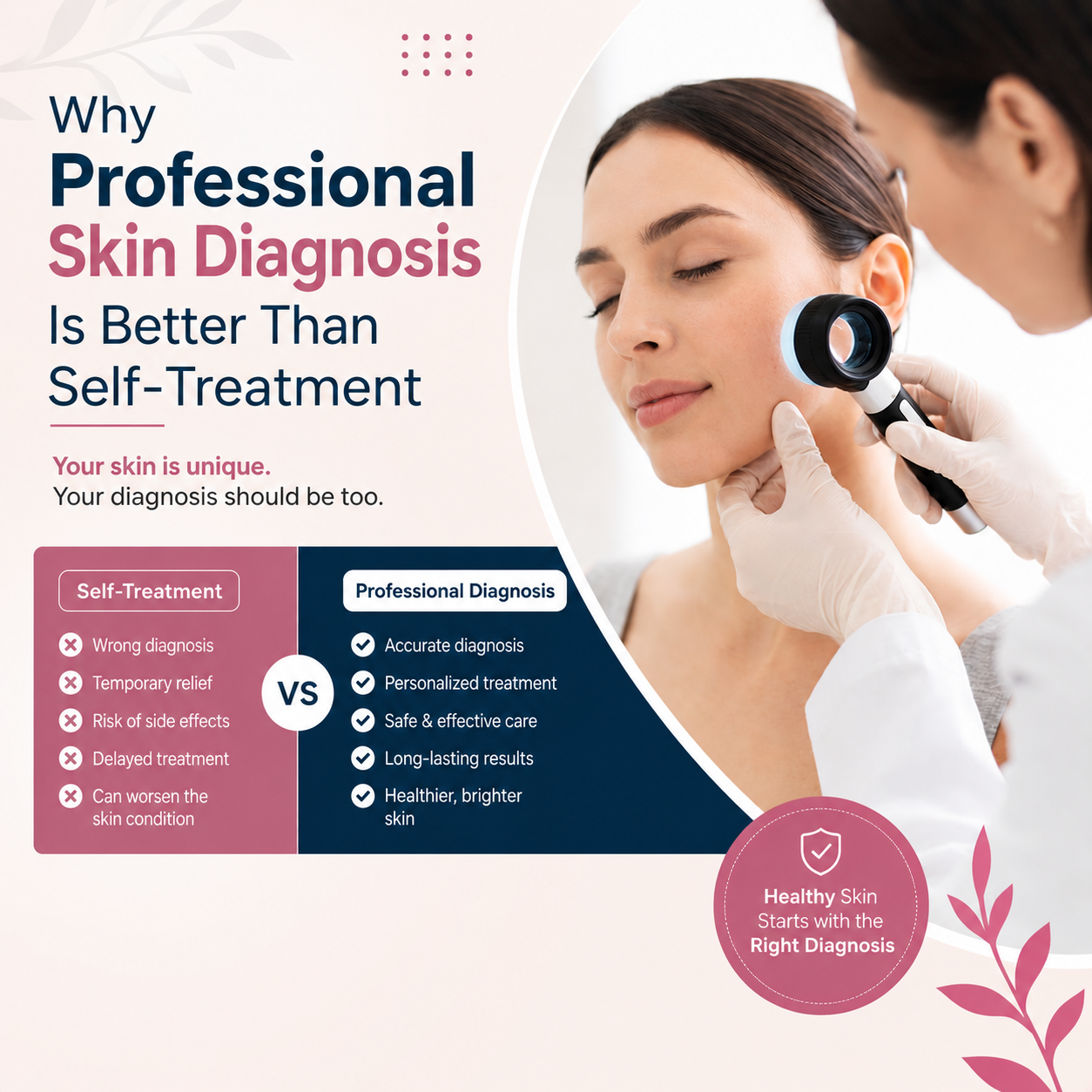
You wake up with a patch of red skin. Before you know it, you’re scrolling through forums, watching YouTube tutorials, and ordering three different products online, all promising to fix your problem. Sound familiar?
When skin concerns arise, many people default to self-treatment. It’s faster. It’s cheaper. It feels empowering. But here’s the uncomfortable truth: guessing what’s wrong with your skin can lead to months of wasted effort, money, and sometimes permanent damage. The human skin is incredibly complex. What looks like one condition often masks another entirely. That’s why a professional skin clinic in PCMC isn’t a luxury; it’s essential healthcare. Let’s explore why professional skin diagnosis matters and why DIY treatments often fail.
Why Self-Treatment Often Fails
Skincare tips abound on the internet. A portion of it is beneficial. Most of it isn’t. Several things go wrong when you rely on self-diagnosis and online treatments:
- First of all, you’re assuming things without doing enough research. Dermatitis is not always indicated by a rash. Skin bumps might not always indicate acne. Treating a condition based on presumptions frequently results in treating the incorrect condition completely.
- Second, false information proliferates on social media like wildfire. That TikTok tip that went viral? One person’s skin type may benefit from it, but yours may suffer greatly. Products advertised as “natural cures” may include hidden substances or don’t deal with the underlying source of your issue.
- Third, over-the-counter products are not tailored to your skin type, degree of sensitivity, or underlying medical condition. Instead of a one-size-fits-all approach, you actually need a diagnostic that takes into account your skin chemistry, lifestyle, and medical history.
Lastly, self-treatment postpones appropriate care. Some problems get worse while you’re exploring with home cures. Early intervention is necessary for certain skin conditions. They get more difficult to treat the longer you wait.
Why Skin Conditions Look Alike (But Aren’t)
This is where dermatology gets tricky: many skin conditions are masqueraders. They look similar but require completely different treatments.
For instance, rosacea and acne both result in red, irritated skin. However, rosacea is a vascular disorder brought on by blood vessel sensitivity, whereas acne is caused by bacteria and clogged pores. In fact, improper acne treatment might lead to flare-ups of rosacea.
For the untrained eye, melasma and basic pigmentation may appear the same. However, melasma requires specific laser treatments, whereas other pigmentation problems may respond to topical medications or chemical peels.
Eczema can be mistaken for a fungal infection. Contact dermatitis may appear as an allergic reaction. You’re basically speculating without a thorough inspection, which may involve biopsies, cultures, or skin scraping.
For this reason, a diagnosis cannot be confirmed by appearance alone. In order to determine the true reason of what you observe, a professional skin examination employs clinical expertise developed over years of study.
Benefits of Professional Skin Diagnosis
You receive much more than just a prescription when you see a dermatologist in PCMC for expert skin care. You have access to knowledge that determines the underlying cause of your illness.
A correct diagnosis entails knowing not just what is wrong but also why it occurred. Does your acne stem from stress, bacteria, or hormones? Did a post-inflammatory reaction, genetics, or UV damage cause your pigmentation? Finding the root cause of a condition completely alters how it is treated.
A dermatologist develops a personalized treatment strategy just for you. Your skin type, sensitivities, medical history, current medications, and lifestyle variables are all taken into account. It is quite acceptable for two individuals with the same illness to get very different therapies. Additionally, professional evaluation helps avoid squandering time and money on inefficient items. Rather than purchasing ten goods and hoping that one would work, you adhere to a strategic strategy that has been shown to perform for your particular circumstance.
Professional care significantly improves long-term results. By addressing the underlying problem rather than just treating the symptom, you can prevent recurrence and enhance the general health of your skin for years to come.
Real Risks of Self-Treatment
The dangers of untreated or incorrectly treated skin conditions extend far beyond frustration. Here are real, documented risks:
Using the incorrect items might cause skin sensitivity and discomfort. Applying strong lotions, retinoids, or acids without the right instructions results in burning, peeling, and barrier damage that takes weeks to heal. When self-treating, allergic responses are frequent. It’s possible that you won’t realize you have an ingredient allergy until your face swells. Long-term sensitivity problems can result from some reactions.
Self-treatment with steroids is surprisingly widespread. To relieve inflammation quickly, they purchase illicit steroids or use unused prescriptions. Steroid abuse results in severe rebound flare-ups, dependency, and skin thinning. When certain illnesses are treated incorrectly, pigmentation changes may be permanent. If you use the incorrect product on melasma, it may become darker rather than lighter damage that is hard to undo. Picking at skin, applying harsh treatments, or allowing infections to worsen untreated can all leave scars. Some wounds never completely heal.
When a diagnosis is delayed, some illnesses worsen beyond the point where they can be easily treated. For instance, late detection makes treating skin cancer more difficult.
Common Skin Problems Requiring Professional Care
Some skin conditions absolutely require dermatologist evaluation. If you experience any of these, stop self-treating and schedule an appointment:
- Acne: Particularly if it is severe, cystic, or unresponsive to over-the-counter remedies
- Melasma and pigmentation: These get worse if you don’t get medical help
- Hair loss: Frequently a sign of an underlying medical condition
- Fungal infections: If left untreated, they spread
- Psoriasis and eczema: Need specific treatment programs
- Persistent itching: This could be a sign of systemic disorders, allergies, or infections.
- Skin allergies: To determine triggers, allergy testing is required.
What Happens During a Professional Skin Consultation
Comprehending the professional process eliminates uncertainty and enables you to see the importance of professional treatment.
A thorough medical history is the first step your dermatologist takes. They inquire about allergies, medications, lifestyle variables, how long you’ve had your symptoms, and what you’ve tried. This background is important. A comprehensive skin examination follows. The dermatologist evaluates the state of your skin through skilled observation, occasionally with the help of magnification devices. To confirm a diagnosis, they may conduct tests such as skin scrapes or cultures for certain illnesses.
Based on the results, they offer a precise diagnosis that explains the nature of your ailment and the reasons behind its development. They make sure you understand what’s going on with your skin and respond to your inquiries. The personalized treatment plan follows. This is more than simply a prescription; it’s a methodical approach that may involve prescription drugs, expert therapies, lifestyle modifications, and condition-specific skincare regimens.
Lastly, they set up follow-up sessions to track development and modify therapy as necessary. Professional treatment is continuous rather than one-time.
When Should You Stop Self-Treating?
The solution is easier than you would think: cease self-treating and see a professional if something isn’t getting better after two to four weeks. That’s a blatant indication that you require professional assistance. Additional warning indicators include deteriorating symptoms in spite of treatment, diseases that are spreading or growing, the emergence of new symptoms, excruciating pain or itching, or any indication of infection, such as pus or warmth in the affected area. Get a professional checkup as soon as possible if you have a family history of dermatological diseases or skin problems. Don’t waste time speculating.
Tips to Protect Your Skin While Seeking Treatment
While you’re addressing your skin condition professionally, these protective measures support healing:
- Use daily sunscreen: UV damage worsens most skin conditions and delays healing
- Cleanse gently: Use lukewarm water and mild products instead of harsh cleansers that harm your skin’s barrier
- Refrain from self-prescribing potent creams: Never utilize leftover medications or other people’s prescription creams.
- Patch test new products by initially applying them to a tiny area to see if there are any reactions
- Keep up good habits: Skin health is supported by sleep, water, stress reduction, and nutrition.
- Adhere to therapy precisely: It’s important to be consistent; don’t miss doses or quit early.
Conclusion
Although self-treatment is alluring, skin issues should be evaluated by a professional. To meet your unique needs, the top skin clinic in PCMC combines knowledge, personalization, and evidence-based treatment.
We at Bodysutra Clinique recognize the individuality of each person’s skin. We’re dedicated to giving your skin the expert diagnosis and individualized treatment programs it deserves. Our skilled dermatologists can assist you with acne, pigmentation, hair loss, or any other issue.
It’s time to try something different if self-treating hasn’t worked for you. Make an appointment for your expert consultation right now to see why professional treatment is so important.
