
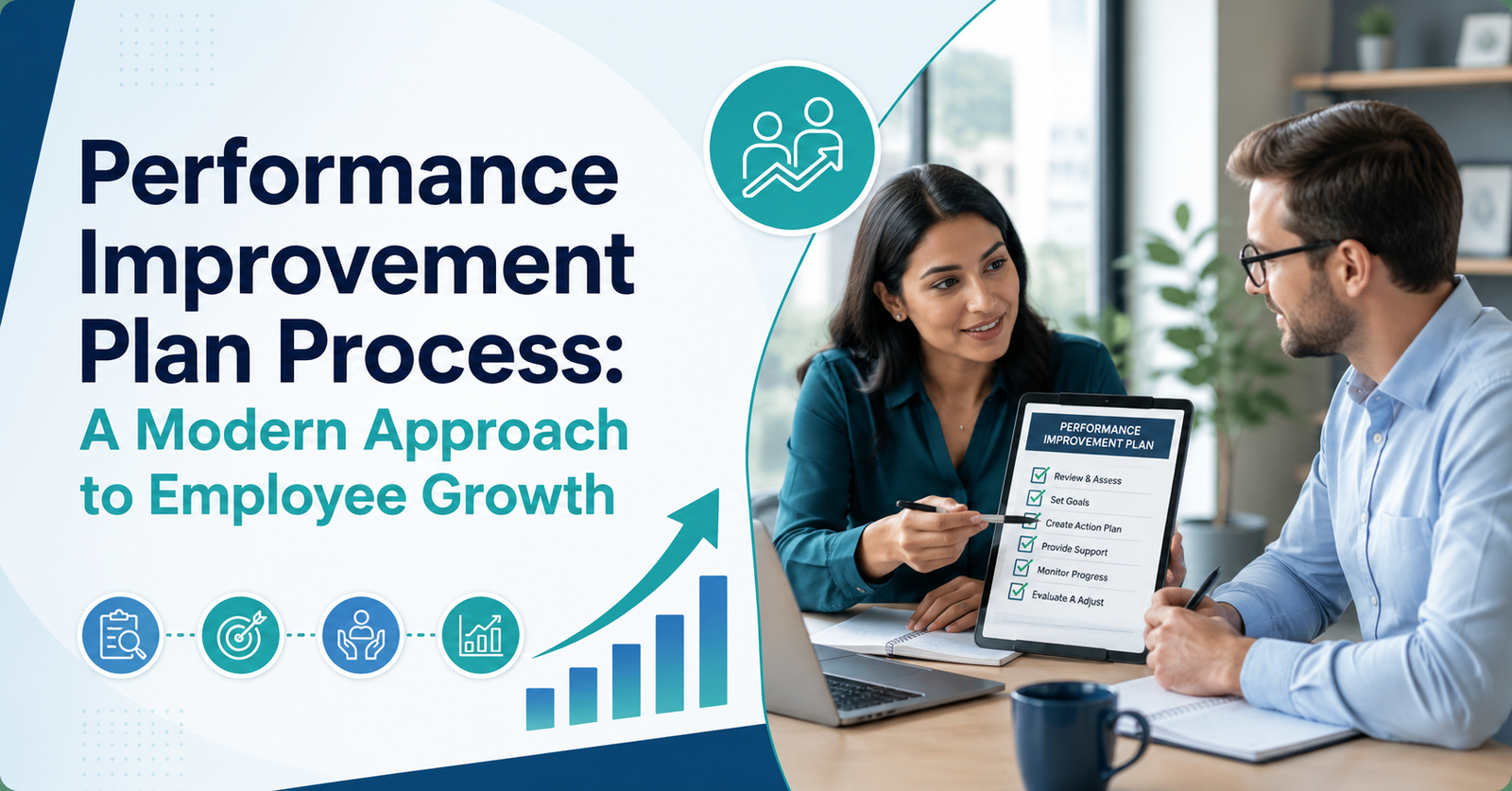
Employee performance directly impacts an organization’s success. When employees struggle to meet expectations, businesses need a structured approach to help them improve rather than immediately considering disciplinary action. This is where the performance improvement plan process becomes an essential part of modern performance management.
Today’s organizations are moving beyond traditional performance reviews by integrating AI-powered analytics, digital collaboration tools, and real-time performance monitoring. A well-designed performance improvement plan (PIP) not only helps employees overcome challenges but also strengthens organizational productivity and employee engagement.
In this article, we’ll explore the complete performance improvement plan process, its benefits, key steps, and how modern technologies are transforming performance management.
What is a Performance Improvement Plan Process?
A performance improvement plan process is a structured method that helps employees improve specific performance issues within a defined timeframe. It outlines clear expectations, measurable goals, available support, and regular progress reviews.
Unlike disciplinary measures, a Performance Improvement Plan (PIP) focuses on coaching, development, and continuous improvement. It gives employees an opportunity to understand performance gaps and receive the necessary resources to succeed.
Why is a Performance Improvement Plan Important?
Organizations implement performance improvement plans for several reasons:
- Improves employee productivity
- Establishes clear performance expectations
- Encourages accountability
- Enhances employee engagement
- Reduces employee turnover
- Supports fair performance evaluations
- Protects organizations through proper documentation
When implemented correctly, a PIP creates transparency between managers and employees while promoting professional development.
Key Steps in the Performance Improvement Plan Process
1. Identify Performance Gaps
The first step is evaluating the employee’s current performance against established job expectations.
Performance issues may include:
- Missed deadlines
- Poor work quality
- Low productivity
- Attendance problems
- Communication challenges
- Failure to achieve KPIs
Managers should rely on objective data rather than assumptions when identifying performance concerns.
2. Analyze Root Causes
Before creating the improvement plan, it’s important to understand why the performance issue exists.
Possible reasons include:
- Lack of training
- Unclear expectations
- Personal challenges
- Inadequate resources
- Technology limitations
- Heavy workload
- Poor communication
Root cause analysis ensures the organization addresses the actual problem instead of only treating the symptoms.
3. Set SMART Performance Goals
The improvement plan should include measurable goals using the SMART framework:
- Specific
- Measurable
- Achievable
- Relevant
- Time-bound
For example:
Instead of saying:
“Improve communication.”
A SMART goal would be:
“Respond to client emails within 24 hours and maintain a customer satisfaction rating above 90% for the next 60 days.”
Clear goals eliminate confusion and simplify progress tracking.
4. Define Support and Resources
An effective performance improvement plan process should provide employees with the tools they need to succeed.
Support may include:
- Training programs
- Mentorship
- Coaching sessions
- Skill development workshops
- Updated software
- Learning platforms
- Performance dashboards
Providing support demonstrates that the organization is invested in employee success.
5. Create an Action Plan
The action plan outlines specific improvement activities.
It typically includes:
- Performance objectives
- Timeline
- Milestones
- Responsibilities
- Required resources
- Review schedule
- Expected outcomes
Both the manager and employee should clearly understand their responsibilities throughout the process.
6. Conduct Regular Progress Reviews
Instead of waiting until the end of the plan, managers should schedule weekly or bi-weekly check-ins.
During review meetings:
- Discuss achievements
- Identify challenges
- Provide constructive feedback
- Adjust goals if necessary
- Recognize improvements
Frequent communication increases accountability and keeps employees motivated.
7. Evaluate Final Results
At the end of the improvement period, managers evaluate whether the employee has successfully met the defined objectives.
Possible outcomes include:
- Successful completion of the plan
- Continued monitoring
- Extended improvement period
- Additional training
- Role reassignment
- Further HR action if performance remains unsatisfactory
A fair evaluation ensures consistency and transparency.
How AI and Modern Technology Improve the Performance Improvement Plan Process
Digital transformation has significantly enhanced performance management. Modern organizations use AI-powered HR solutions to make improvement plans more effective and data-driven.
AI Performance Analytics
Artificial Intelligence identifies productivity trends, predicts performance risks, and highlights areas requiring improvement before issues become severe.
Real-Time Performance Dashboards
Interactive dashboards provide managers with live performance metrics, making progress tracking more accurate.
Learning Management Systems (LMS)
Integrated LMS platforms automatically recommend personalized training courses based on employee skill gaps.
Predictive Analytics
Machine learning helps HR teams identify employees who may need additional coaching before performance declines significantly.
Collaboration Platforms
Tools like Microsoft Teams, Slack, and project management software improve communication, goal tracking, and feedback sharing throughout the improvement process.
Automated Performance Reports
Modern HR software automatically generates reports, reducing administrative work while ensuring consistent documentation.
Best Practices for a Successful Performance Improvement Plan
Organizations can maximize results by following these best practices:
- Focus on improvement rather than punishment.
- Use measurable performance indicators.
- Maintain regular communication.
- Provide continuous coaching.
- Document every discussion and milestone.
- Celebrate progress and achievements.
- Leverage AI-powered HR tools for data-driven decision-making.
- Ensure transparency throughout the process.
These practices build trust and encourage employees to actively participate in their development.
Common Mistakes to Avoid
Many organizations fail because they make avoidable mistakes during the performance improvement plan process.
Avoid:
- Setting unrealistic expectations
- Using vague performance goals
- Providing insufficient support
- Delaying feedback sessions
- Ignoring employee concerns
- Focusing only on weaknesses
- Treating the PIP as a termination process
A successful improvement plan should motivate employees, not discourage them.
Conclusion
The performance improvement plan process is much more than a corrective tool. It is a strategic framework that helps organizations develop talent, improve productivity, and strengthen employee engagement. By combining structured performance management with modern technologies such as AI analytics, automated reporting, and digital learning platforms, businesses can create a more supportive and effective workplace.
Organizations that invest in employee development through well-planned performance improvement strategies often experience higher retention rates, stronger team performance, and long-term business success.
Frequently Asked Questions (FAQs)
1. What is a performance improvement plan process?
A performance improvement plan process is a structured approach that helps employees improve job performance through defined goals, timelines, coaching, and regular evaluations.
2. How long does a performance improvement plan usually last?
Most performance improvement plans last between 30 and 90 days, depending on the complexity of the performance issues and organizational policies.
3. What should be included in a performance improvement plan?
A PIP should include performance concerns, measurable goals, action steps, timelines, support resources, review meetings, and expected outcomes.
4. Can AI improve the performance improvement plan process?
Yes. AI helps organizations analyze performance data, identify skill gaps, recommend personalized training, automate reporting, and monitor employee progress in real time.
5. Is a performance improvement plan always a disciplinary action?
No. A well-designed PIP is primarily a development tool intended to help employees improve performance through coaching, support, and continuous feedback.
6. What are the benefits of using a performance improvement plan?
Benefits include increased productivity, better employee engagement, improved accountability, fair performance evaluations, stronger documentation, and reduced employee turnover.
