
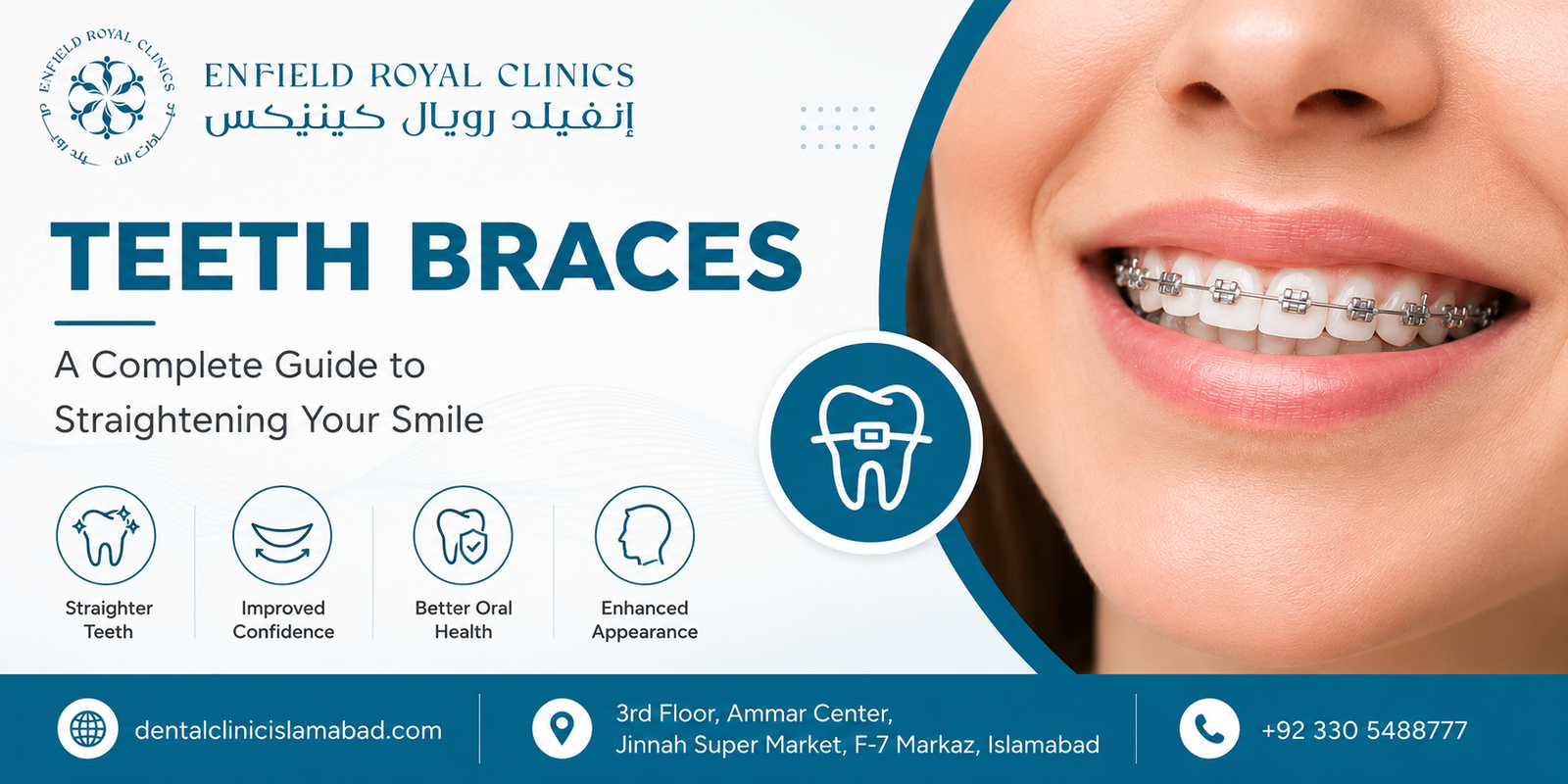
Healthy gums are essential for maintaining strong teeth and long-term oral health. Unfortunately, misaligned teeth can make proper cleaning difficult, allowing plaque and bacteria to accumulate around the gumline. Over time, this buildup may lead to gum inflammation, bleeding, and periodontal disease. Orthodontic treatment plays an important role in improving oral hygiene and reducing these risks. Teeth braces in Islamabad Pakistan help create better tooth alignment, making it easier to maintain healthy gums and prevent future dental complications.
Understanding Gum Disease
Gum disease, also known as periodontal disease, is an infection of the tissues that support the teeth. It usually begins with plaque accumulation and inflammation of the gums.
Common signs of gum disease include:
- Red gums
- Swollen gums
- Bleeding during brushing
- Persistent bad breath
- Gum recession
- Tooth sensitivity
- Loose teeth
- Discomfort while chewing
Early prevention is essential for maintaining healthy gums.
How Misaligned Teeth Contribute to Gum Disease
When teeth are crowded or improperly positioned, cleaning every surface becomes more difficult.
This may result in:
- Plaque buildup
- Food retention
- Bacterial growth
- Gum irritation
- Increased inflammation
- Poor oral hygiene
- Higher periodontal risk
- Tooth decay
Orthodontic treatment helps eliminate many of these problem areas.
The Link Between Crowded Teeth and Gum Problems
Crowded teeth often create tight spaces that are difficult to clean effectively.
Potential concerns include:
- Trapped food particles
- Plaque accumulation
- Tartar formation
- Gum inflammation
- Increased bleeding
Braces help create healthier spacing and improve cleaning accessibility.
How Braces Help Protect Gum Health
Braces gradually move teeth into more favorable positions that support oral hygiene.
Treatment helps:
- Improve alignment
- Enhance brushing access
- Make flossing easier
- Reduce plaque retention
- Support healthier gums
These improvements help lower the risk of gum disease over time.
Better Oral Hygiene Through Proper Alignment
One of the most significant benefits of orthodontic treatment is improved oral hygiene.
Benefits include:
- Easier brushing
- Better flossing access
- Reduced bacterial accumulation
- Lower plaque levels
- Improved gum maintenance
Healthy cleaning habits become easier to maintain after alignment correction.
Reduced Plaque and Tartar Buildup
Plaque is the primary cause of gum disease. When left untreated, it hardens into tartar.
Braces help by:
- Improving tooth positioning
- Eliminating difficult-to-clean areas
- Supporting effective brushing
- Reducing bacterial growth
This helps create a healthier oral environment.
Healthier Gum Support Structures
Proper alignment helps distribute chewing forces more evenly across the teeth and gums.
Benefits include:
- Improved gum support
- Reduced tissue stress
- Better periodontal health
- Enhanced long-term stability
Healthy gums are essential for maintaining natural teeth.
Additional Benefits of Orthodontic Treatment
Beyond gum disease prevention, braces offer several important advantages.
Improved Bite Function
Balanced bite alignment helps improve oral function.
Benefits include:
- Better chewing efficiency
- Reduced jaw strain
- Improved comfort
- Enhanced dental stability
These improvements support overall oral wellness.
Reduced Tooth Wear
Misaligned teeth often experience uneven chewing forces.
Orthodontic treatment helps:
- Balance bite pressure
- Protect enamel
- Reduce sensitivity
- Prevent excessive wear
This contributes to long-term tooth preservation.
Enhanced Smile Appearance
Orthodontic treatment also improves smile aesthetics.
Benefits include:
- Straighter teeth
- Better symmetry
- Improved facial harmony
- Increased confidence
Many patients enjoy both functional and cosmetic improvements.
Common Orthodontic Issues Associated with Gum Problems
Several alignment concerns may increase the risk of periodontal disease.
Crowded Teeth
Crowding creates tight spaces that trap plaque and bacteria.
Overlapping Teeth
Overlapping teeth can make brushing and flossing more challenging.
Rotated Teeth
Rotated teeth often have surfaces that are difficult to clean effectively.
Bite Irregularities
Improper bite relationships may contribute to uneven pressure on gum tissues.
Braces help address these concerns while supporting healthier gums.
Modern Braces Options Available
Today’s orthodontic treatments provide multiple effective solutions.
Traditional Metal Braces
Metal braces remain one of the most reliable orthodontic systems.
Advantages include:
- Strong durability
- Effective correction
- Predictable outcomes
- Suitable for complex cases
They continue to provide excellent treatment results.
Ceramic Braces
Ceramic braces use tooth-colored brackets for improved aesthetics.
Benefits include:
- Less noticeable appearance
- Effective alignment correction
- Comfortable wear
- Popular among adults
They provide a discreet treatment alternative.
Self-Ligating Braces
Self-ligating braces use specialized clips rather than elastic ties.
Advantages include:
- Reduced friction
- Easier maintenance
- Enhanced comfort
- Efficient treatment progression
Many patients appreciate their convenience.
Clear Aligners
Clear aligners use transparent removable trays to reposition teeth gradually.
Benefits include:
- Nearly invisible appearance
- Comfortable fit
- Better oral hygiene
- Easy removal
Suitability depends on individual orthodontic needs.
The Orthodontic Treatment Process
Orthodontic treatment follows a personalized and structured approach.
Initial Consultation
The orthodontist performs a detailed assessment that may include:
- Oral examination
- Bite evaluation
- Digital scans
- X-rays
- Clinical photographs
These records help determine the most suitable treatment plan.
Customized Treatment Planning
Treatment recommendations are based on:
- Alignment concerns
- Oral health condition
- Bite relationship
- Treatment goals
- Estimated duration
Every patient receives individualized care.
Active Treatment
Brackets and wires or aligners gradually move teeth into healthier positions.
Follow-Up Appointments
Routine visits allow the orthodontist to:
- Monitor progress
- Make adjustments
- Guide tooth movement
- Ensure successful outcomes
Regular monitoring supports effective treatment.
Maintaining Healthy Gums During Braces Treatment
Patients should follow proper oral hygiene practices throughout treatment.
Recommended habits include:
- Brushing after meals
- Flossing daily
- Using fluoride toothpaste
- Cleaning around brackets carefully
- Attending regular dental visits
- Following professional recommendations
Consistent oral care helps maintain healthy gums and teeth.
Final Thoughts
Healthy gums are the foundation of a healthy smile, and orthodontic treatment can play an important role in protecting periodontal health. By improving alignment and making oral hygiene easier, braces help reduce the risk of gum disease while supporting long-term dental wellness. For expert orthodontic treatment and personalized dental care, visit Dental Clinic Islamabad.
