
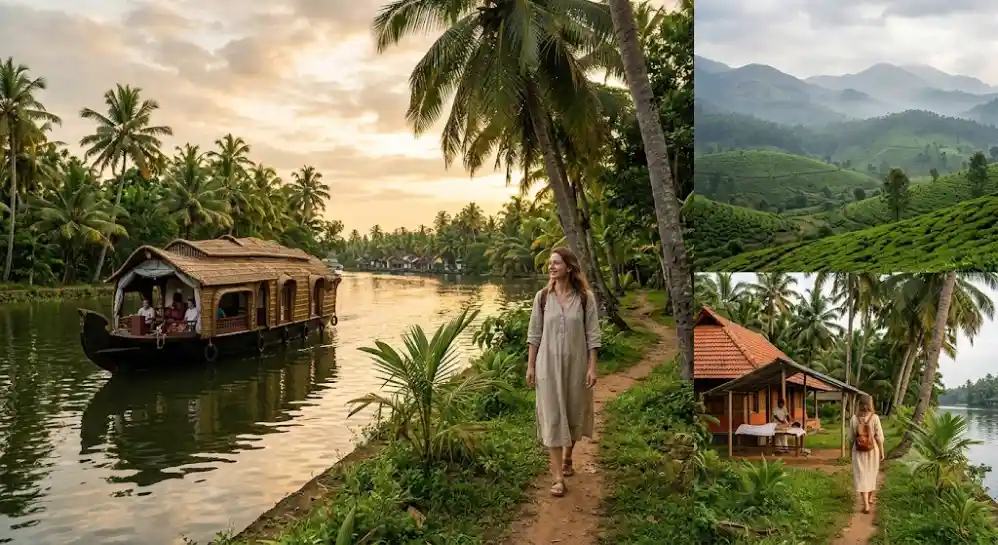
There is a distinct shift in the air the moment you cross the border into Kerala. Unlike the fast-paced, high-energy environment found in other parts of India, this coastal southern state moves to a much gentler rhythm. It is a region defined by quiet, palm-fringed backwaters, misty spice hills, and a deeply rooted commitment to health and well-being.
For Western travelers, Kerala offers an ideal entry point to the Indian subcontinent. It combines high literacy rates, a peaceful social environment, and an established tourism infrastructure that warmly welcomes international visitors without losing its authentic charm. Whether you are looking for deep relaxation, a brush with ancient history, or a peaceful escape into nature, this comprehensive guide will help you plan a perfectly paced holiday.
The Best Time to Visit Kerala
Planning your trip around the local tropical weather is essential for a smooth and comfortable vacation. Kerala experiences two distinct monsoon seasons that shape its landscape throughout the year.
- October to March (Peak Season): This is the best window for a first-time holiday. As the heavy summer rains recede, the winter months offer beautifully clear skies, lower humidity, and comfortably warm temperatures ranging from 22°C to 32°C (71°F to 90°F). This is the perfect climate for trekking through hill stations, walking through historic towns, and spending quiet nights on houseboats.
- April to May (Summer): Temperatures and humidity rise significantly during these months. While the coastal plains can get quite hot, this is an excellent time to retreat into the high-altitude hill stations of the Western Ghats, where the mountain air stays refreshingly cool.
- June to September (Monsoon Season): While heavy downpours can disrupt outdoor sightseeing and trekking, this is actually the premier time of year for wellness travelers. Traditional Ayurvedic practitioners note that the cool, humid atmosphere naturally opens up the body’s pores, making it the most effective time for therapeutic herbal oil treatments.
Top Places to Visit & Things to Do
Most classic Kerala itineraries balance three iconic regions that showcase the state’s geographic diversity. Travelers typically begin in the historic port town of Fort Kochi, where centuries of Portuguese, Dutch, and British colonial architecture tell the story of the global spice trade.
From the coast, visitors journey upward into the emerald-green hills of Munnar, where sprawling tea plantations blanket the mountainsides. Finally, no trip is complete without traveling to Alappuzha (Alleppey) to spend a quiet afternoon gliding through the famous backwater canals aboard a traditional thatch-roofed houseboat.
However, if your goal is to skip the main commercial tourist trails and dive deeper into nature, you should head north.
Wayanad: Off-the-Beaten-Path
Tucked away in the mountains of Northern Kerala, Wayanad is an eco-tourism paradise characterized by high-altitude mist, dense forests, and vibrant tribal cultures. Because it takes a bit more effort to reach than the southern hubs, it offers a much quieter, uncrowded alternative to the busier tourist centers.
- Edakkal Caves: Located high up in the Ambukuthi Hills, this is not a standard geological cave system, but rather a massive natural rock cleft. Inside this shelter lie rare prehistoric rock carvings dating back to the Neolithic era, with some etchings estimated to be over 7,000 years old. The moderate trek up the mountain path rewards you with an intimate look at ancient human history and panoramic views of the valleys below.
- Banasura Sagar Dam: Holding the title of the largest earthen dam in India, this engineering marvel is constructed entirely out of massive boulders and local earth. The dam creates a stunning, expansive reservoir dotted with tiny, forested islands. For travelers, it serves as a fantastic hub for an active afternoon, offering speed-boating trips across the glass-like water and rugged treks up the surrounding Banasura Peak.
The Rise of Ayurvedic Wellness
To truly understand Kerala, you must explore Ayurveda—a 5,000-year-old traditional system of natural medicine focused on balancing the body’s natural energies. Rather than treating Ayurveda as a quick spa luxury, the global travel community recognizes Kerala as the ultimate center for authentic, clinical wellness treatments.
An increasing number of international travelers choose to structure their entire Kerala holidays around a dedicated health pilgrimage, booking 7- to 14-day wellness retreats at specialized eco-sanctuaries.
What is Panchakarma? The cornerstone of deep wellness travel here is Panchakarma—a personalized, multi-day detoxification and rejuvenation process overseen by certified Ayurvedic physicians. A proper program combines custom herbal diets, synchronized daily oil massages (Abhyanga), and intensive cleansing therapies designed to eliminate deep-seated toxins and reset the nervous system.
Essential Practical Tips for Western Travelers
1. Embrace Slow Travel
Because Kerala’s geography is long and narrow, local roads snake directly through mountain passes, dense forests, and vibrant village markets. Attempting to rush from town to town on a packed schedule will quickly lead to exhaustion. A 10- to 14-day itinerary is ideal to comfortably absorb the local culture without feeling rushed. Plan to spend at least three nights in a single location rather than moving every morning, allowing yourself to match the unhurried pace of the local environment.
2. Prioritize Safe Hydration
The tropical humidity means staying well-hydrated is critical to your energy levels. Stick strictly to sealed bottles of mineral water or purified water provided by reputable eco-resorts. When exploring local roads, try the fresh, electrolyte-rich coconut water sold by roadside vendors. This is highly recommended, provided you ask the vendor to select a fresh fruit and open it directly in front of you using a clean blade.
3. Respect Local Etiquette
While popular beach destinations like Varkala are entirely accustomed to Western swimwear, conservative dress is expected when traveling through villages, local markets, or heritage sites. When visiting temples or sacred spaces, keep your shoulders and knees covered with loose, breathable clothing. Always remove your shoes before entering someone’s private home or stepping inside any place of worship.
Plan Your Journey
Ultimately, a trip here is less about ticking famous monuments off a frantic checklist and more about embracing a slower lifestyle. By checking out of the fast lane, exploring the lesser-known northern hills of Wayanad, and giving your body time to reset at a wellness retreat, your holiday to Kerala will be exactly what travel is supposed to be: truly transformative.
To see how the region balances international hospitality with environmental conservation, take a look at this overview of Sustainable Tourism in Kerala, which highlights the state’s award-winning green travel initiatives.
