
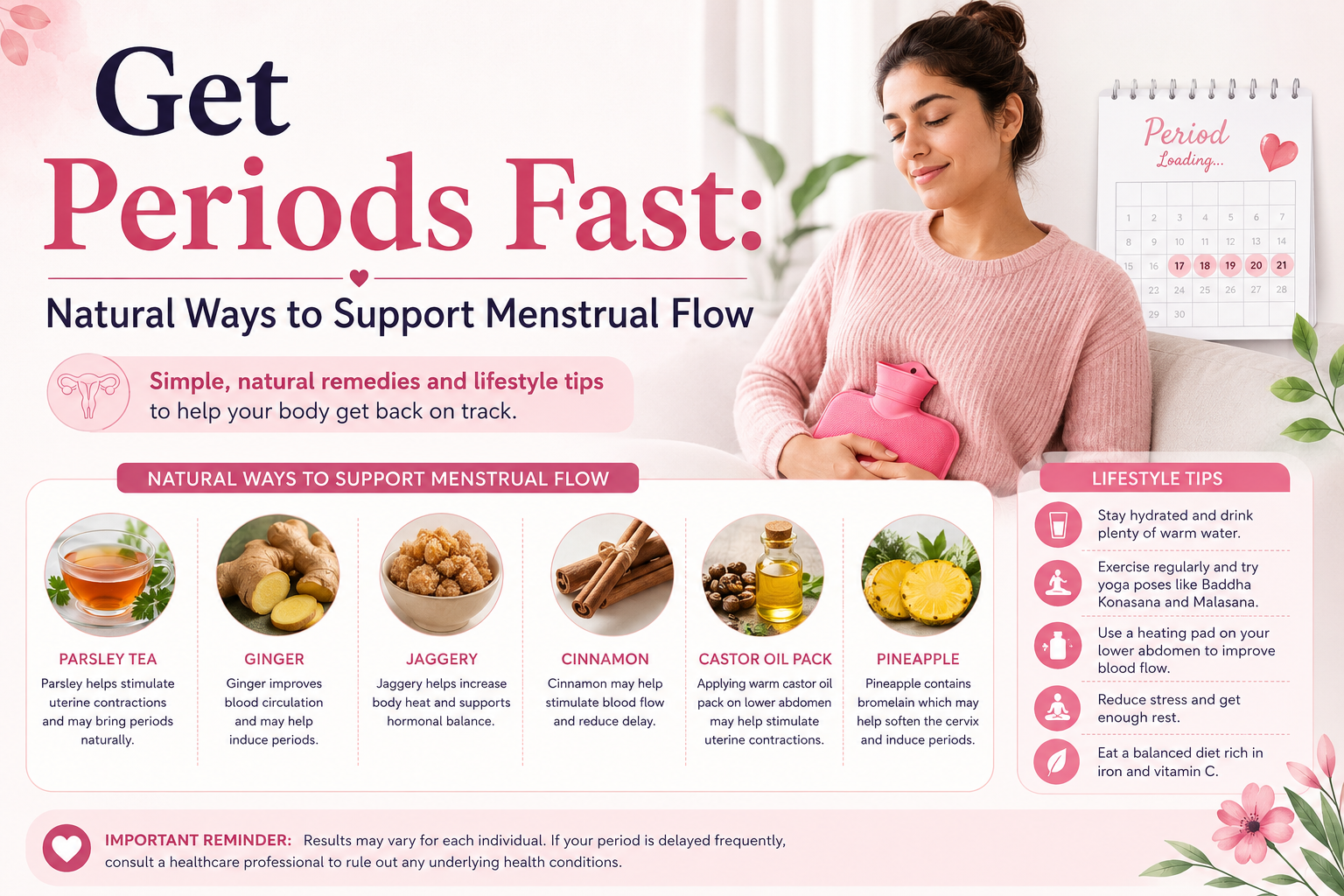
A delayed period can be frustrating and stressful, especially for women who usually have regular menstrual cycles. While occasional delays are common and often harmless, many women look for safe ways to encourage their periods to start sooner. It’s important to understand that there is no guaranteed method to instantly bring on a period, but certain lifestyle changes and natural approaches may help support hormonal balance and menstrual regularity.
Before trying any method to induce periods, it is essential to rule out pregnancy and understand the possible reasons behind the delay.
Why Periods May Be Delayed
Menstrual cycles are influenced by a complex interaction of hormones. Even small disruptions can affect the timing of a period.
Common causes of delayed periods include:
- Stress and anxiety
- Hormonal imbalances
- Polycystic ovary syndrome (PCOS)
- Thyroid disorders
- Sudden weight gain or weight loss
- Excessive exercise
- Poor nutrition
- Pregnancy
- Certain medications
Understanding the underlying cause is the first step toward addressing menstrual irregularities.
Can You Get Periods Fast Naturally?
While natural methods may help support the body’s hormonal processes, they do not guarantee immediate menstruation. These approaches are most effective when delayed periods are linked to lifestyle factors rather than medical conditions.
Manage Stress Levels
Stress is one of the leading causes of missed or delayed periods. When the body experiences emotional or physical stress, hormone production can be affected, disrupting ovulation and menstruation.
Ways to Reduce Stress:
- Meditation
- Deep breathing exercises
- Yoga
- Spending time outdoors
- Listening to relaxing music
Lowering stress levels may help restore normal menstrual function.
Maintain a Healthy Diet
Nutrition plays a major role in reproductive health. A balanced diet helps support hormone production and overall well-being.
Include:
- Fresh fruits
- Vegetables
- Whole grains
- Lean proteins
- Healthy fats
Nutrient deficiencies may contribute to irregular cycles, so eating a variety of healthy foods is important.
Stay Hydrated
Proper hydration supports many bodily functions, including circulation and metabolism. Drinking enough water can also help reduce bloating and support overall menstrual health.
Although water alone cannot trigger periods, it contributes to a healthier reproductive system.
Exercise in Moderation
Regular physical activity promotes healthy blood circulation and hormonal balance.
Recommended Activities:
- Walking
- Swimming
- Cycling
- Gentle stretching
- Yoga
Moderate exercise may help regulate menstrual cycles. However, excessive exercise can sometimes delay periods further.
Use Heat Therapy
Applying warmth to the lower abdomen may help relax muscles and improve blood flow.
Options Include:
- Heating pads
- Warm water bottles
- Warm baths
Heat therapy may also relieve cramps and pelvic discomfort associated with menstruation.
Ginger and Menstrual Health
Ginger has traditionally been used to support menstrual health and improve circulation.
Potential benefits include:
- Reduced inflammation
- Improved digestion
- Support for hormonal balance
Many women consume ginger tea as part of their wellness routine, although scientific evidence regarding period induction remains limited.
Cinnamon as a Traditional Remedy
Cinnamon is commonly used in traditional medicine for reproductive health.
It may:
- Support blood circulation
- Help regulate menstrual cycles
- Reduce menstrual discomfort
Including cinnamon in a balanced diet may contribute to overall wellness.
Consume Vitamin C-Rich Foods
Some believe that vitamin C may influence estrogen levels and support menstruation, although scientific evidence is limited.
Vitamin C Sources:
- Oranges
- Lemons
- Strawberries
- Kiwi
- Bell peppers
These foods also strengthen the immune system and provide essential nutrients.
Maintain a Healthy Body Weight
Body weight significantly affects hormone levels. Being underweight or overweight can interfere with ovulation and menstrual regularity.
Healthy habits that support a balanced weight include:
- Nutritious eating
- Regular exercise
- Adequate sleep
Gradual and sustainable lifestyle changes are most beneficial.
Importance of Sleep
Sleep plays a crucial role in hormone regulation.
Poor sleep habits can disrupt:
- Estrogen production
- Progesterone levels
- Ovulation patterns
Aim for consistent, quality sleep each night to support menstrual health.
When to Take a Pregnancy Test
If your period is late and pregnancy is possible, taking a pregnancy test should be the first step before attempting any remedies.
Home pregnancy tests are generally reliable after a missed period and can provide quick results.
Medical Options for Delayed Periods
When menstrual irregularities are caused by underlying health conditions, medical treatment may be necessary.
Healthcare providers may recommend:
- Hormonal medications
- Treatment for thyroid disorders
- Management of PCOS
- Lifestyle modifications
Self-medicating without professional guidance is not recommended.
When to See a Doctor
Consult a healthcare provider if:
- Your periods are absent for more than three months
- Cycles are consistently irregular
- You experience severe pelvic pain
- Bleeding is unusually heavy
- Pregnancy has been ruled out but periods remain absent
Early medical evaluation can help identify and address underlying concerns.
Common Myths About Getting Periods Fast
Myth 1: Certain Foods Can Instantly Start a Period
No specific food can guarantee immediate menstruation.
Myth 2: More Exercise Is Better
Excessive exercise may worsen hormonal imbalances and delay periods.
Myth 3: Herbal Remedies Always Work
Natural remedies may support overall health but are not guaranteed solutions.
Understanding these myths can help women make safer and more informed decisions.
Supporting Long-Term Menstrual Health
Regular menstrual cycles are often a reflection of overall health.
Healthy habits include:
- Eating balanced meals
- Managing stress
- Exercising regularly
- Staying hydrated
- Getting enough sleep
- Attending routine medical check-ups
Tracking menstrual cycles can also help identify patterns and changes over time.
Final Thoughts
If you’re looking to get periods fast, it’s important to focus on supporting your body’s natural hormonal balance rather than searching for instant solutions. Stress management, healthy eating, moderate exercise, proper hydration, and adequate sleep can all contribute to menstrual regularity.
While occasional delays are common, persistent irregularities should not be ignored. Consulting a healthcare professional can help identify the underlying cause and ensure appropriate treatment when needed. A healthy lifestyle remains one of the most effective ways to support regular and predictable menstrual cycles.
