
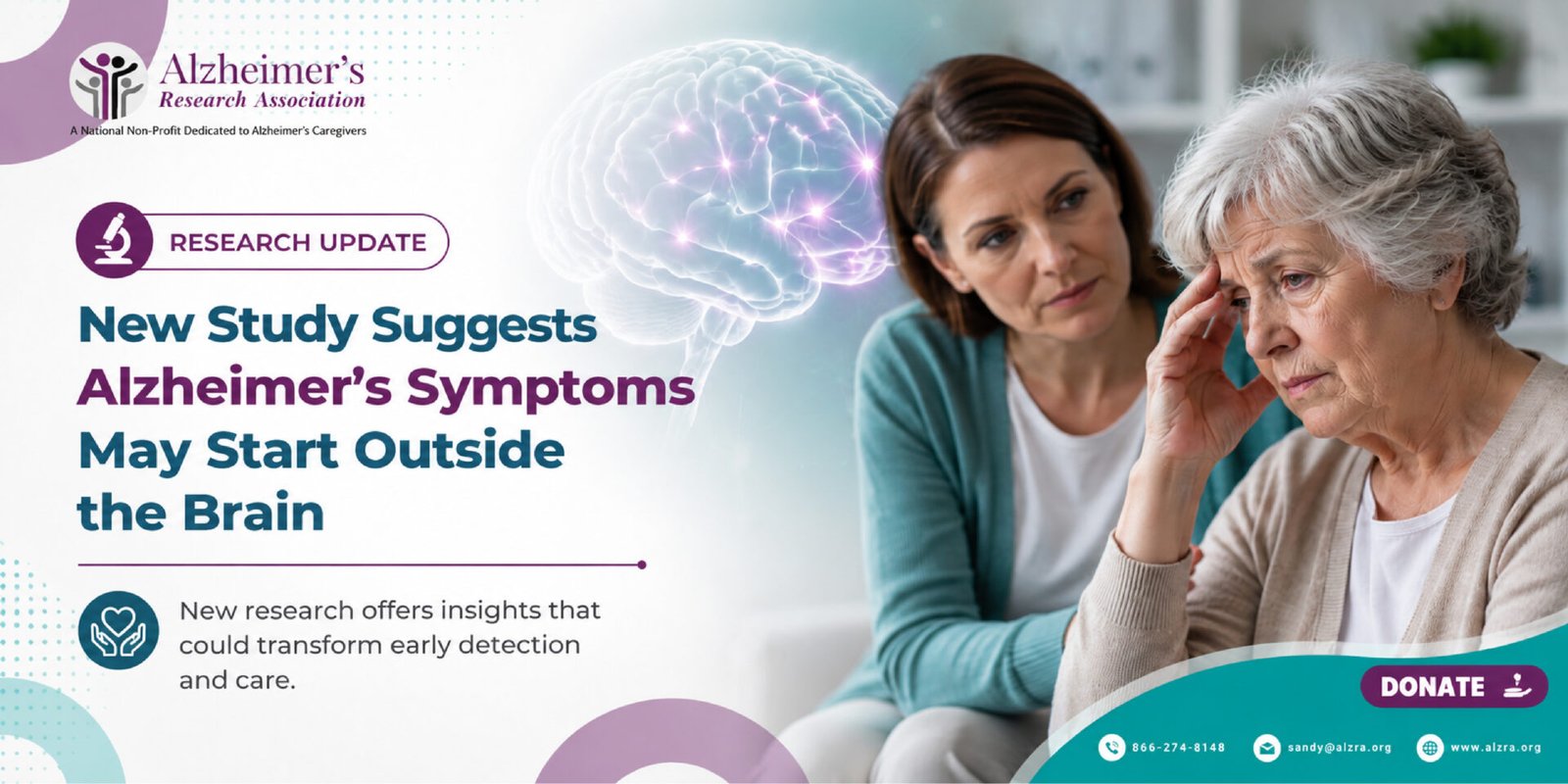
Recent research indicates that the balance and gait problems seen in Alzheimer’s disease may stem not from brain deterioration, but from dysfunction in the peripheral nervous system. The study demonstrated that genetic mutations for familial Alzheimer’s can directly harm the connection between nerves and muscles, irrespective of the brain or spinal cord, using “human-on-a-chip” technology.
New research from the researchers at the University of Central Florida suggests that some early movement problems linked to Alzheimer’s may actually start outside the brain. This study raises new questions about where the disease begins and how early it can be detected. If future studies confirm this idea, it could explain why small changes in walking, balance, or muscle coordination often emerge before noticeable memory decline.
Research Professor Xiufang “Nadine” Guo and Professor James Hickman of the UCF Nanoscience Technology Center led the project. In collaboration with researchers from the healthcare technology company Hesperos, the team investigated the effects of genetic mutations linked to familial Alzheimer’s disease on movement using lab-grown human cell systems that replicate bodily activities.
According to Guo, motor impairments could be an early sign of Alzheimer’s. Detecting these changes and intervening early may help delay the onset of central nervous system symptoms.
The journal Alzheimer’s & Dementia: The Journal of the Alzheimer’s Association published this research [1].
The Link Between Movement and Alzheimer’s
Familial Alzheimer’s is a rare genetic form of the condition that manifests earlier (between 40 and 65 years of age) than the more common kind.
Even though dementia and memory loss are the most well-known symptoms of Alzheimer’s, physicians have long noted that some patients exhibit changes in movement, balance, or gait (the way they walk) years before cognitive symptoms manifest. These early indicators imply that some aspects of the illness might originate outside of the brain.
Using an advanced laboratory technique, the researchers demonstrated that damaged motor neurons can impair the neuromuscular junction, a critical connection essential for movement even in the absence of brain input.
According to Hickman, this is the first time that it has been shown that these mutations can directly cause deficits in the peripheral nervous system. It implies that medications that target the brain might not address issues elsewhere in the body.
Guo also mentioned that maintaining motor function may enhance brain health, as physical activity is tied to cognitive well-being.
Building Human Disease Models in the Lab
The team used “human-on-a-chip” technology created by Hesperos, a company that Hickman co-founded, to study how these mutations affect movement. These small systems mimic how human cells interact in the body, providing a more realistic way to investigate disease than standard lab or animal models.
To replicate the connection between motor neurons and muscle cells, the researchers developed a neuromuscular junction-on-a-chip. Notably, it does not include the brain or spinal cord. By concentrating just on motor neurons and muscle cells, the scientists could investigate whether movement issues can develop independently of the central nervous system.
The researchers combined healthy muscle cells with motor neurons created from stem cells carrying familial Alzheimer’s mutations. The findings suggest that movement-related issues may originate in peripheral nerve networks rather than being caused only by brain degeneration.
Why the Nerve-to-Muscle Connection Matters
At the neuromuscular junction, a nerve cell signals a muscle to contract, enabling movement. Damage to this link can negatively impact strength, coordination, and endurance.
The study examined how nerve signals induce muscle contractions and evaluated how long muscles can sustain activity before fatigue occurs. These measurements are similar to those used in clinical assessments of movement disorders.
You cannot move unless the motor circuit works, according to Hickman. When a medical professional taps your knee to assess your reflex, they are evaluating that precise connection.
What’s Ahead for “Human-on-a-Chip” Technology
As scientists seek more accurate techniques to investigate human disease, the researchers believe this methodology will play an increasingly important role in medication development.
These techniques can identify effects that may not be evident in animal research, as they assess actual biological activity using human cells.
According to Hickman, this project builds on three decades of research focused on improving the understanding and management of diseases.
He stated that these technologies will allow scientists to study diseases more realistically, which is crucial for developing better treatments.
Alzheimer’s Research Association is a non-profit organization dedicated to helping caregivers of Alzheimer’s disease and dementia. We provide the latest information and news about the illness and helpful tips to help caregivers cope with their daily caregiving challenges. We realize the most important thing that a caregiver needs is financial assistance. Therefore, we provide grants to caregivers to ease their financial burden. Caregivers can apply for grants here: Alzheimer’s Grant Application.
You can also help caregivers in their endeavor by donating as much as possible: Donation to Alzheimer’s Research Associations.
References
- Kargazhanov, A., Aiken, R., Hawkins, K., Lopez, R., Nawaz, A., Srivastava, G., Miller, C., Bogen, W., Long, C., Morgan, D. and Guo, X., 2026. Evaluating the peripheral nervous system pathology of Alzheimer’s disease utilizing a functional human NMJ microphysiological system. Alzheimer’s & Dementia, 22(4), p.e71281.
- Alzheimer’s Symptoms May Start Outside the Brain, Study Finds. SciTech Daily. https://scitechdaily.com/alzheimers-symptoms-may-start-outside-the-brain-study-finds/. Published Online: 22nd April, 2026. Accessed: 15th June, 2026.
- Dougherty, E. UCF Study Suggests Some Alzheimer’s Symptoms May Begin Outside the Brain. UCF Today. https://www.ucf.edu/news/ucf-study-suggests-some-alzheimers-symptoms-may-begin-outside-the-brain/. Published Online: 16th April, 2026. Accessed: 15th June, 2026.
- Study suggests some Alzheimer’s symptoms may begin outside the brain. Medical Xpress. https://medicalxpress.com/news/2026-04-alzheimer-symptoms-brain.html. Published Online: 17th April, 2026. Accessed: 15th June, 2026.
- Could Alzheimer’s Begin in the Nerves, Not the Brain? Neuroscience News. https://neurosciencenews.com/alzheimers-peripheral-nervous-system-30540/. Published Online: 17th April, 2026. Accessed: 15th June, 2026.
