
Persistent discomfort in the lower abdomen and pelvis can be a deeply disruptive experience, twisting itself into every aspect of daily life, from simple mobility to emotional well-being. Because the pelvic bowl houses an intricate web of vascular, neurological, reproductive, and musculoskeletal systems, isolating the root cause of chronic pelvic pain (CPP) is notoriously difficult. Standard medical interventions frequently fall short because they view the issue through a single lens treating the symptom while ignoring the structural framework supporting it.
Achieving true, lasting relief requires moving beyond temporary fixes like standard anti-inflammatory medications. A comprehensive, multimodal paradigm that addresses both visceral and somatic contributors offers the only reliable pathway to healing. By reshaping how we understand the complex interplay of pelvic anatomy, we can build a highly individualized roadmap to recovery.
Navigating the Multidimensional Nature of Pelvic Discomfort
To eliminate chronic pelvic discomfort permanently, patients must utilize a multimodal strategy that integrates medical, physical, and psychological interventions. Because the condition involves overlapping nervous and musculoskeletal systems, successful intervention relies on breaking the cycle of peripheral and central nervous system sensitization.
When a person experiences pelvic pain over months or years, the nervous system undergoes a structural and functional recalibration known as central sensitization. In this state, the spinal cord and brain become hyper-reactive, amplifying normal sensory inputs into signals of severe distress. What began as a localized issue such as endometriosis, interstitial cystitis, or a past structural injury evolves into a self-sustaining neurological loop.
To disrupt this loop, clinical frameworks prioritize identifying focal areas of tenderness within individual structural tissues. A comprehensive clinical roadmap transitions through three specific phases:
- Systemic Down-Regulation: Quieting the hyper-reactive nervous system using specialized neurological modulators.
- Somatic Rehabilitation: Restoring structural length, optimal blood flow, and functional coordination to the core musculature.
- Visceral Management: Addressing underlying organ-specific inflammation or hormonal fluctuations that act as persistent triggers.
Dismissing the condition as merely a visceral or hormonal problem is a frequent misstep in standard care. True structural recovery demands a deeper look into the supporting framework of the lower torso.
Restoring Balance Through Specialized Physical Medicine
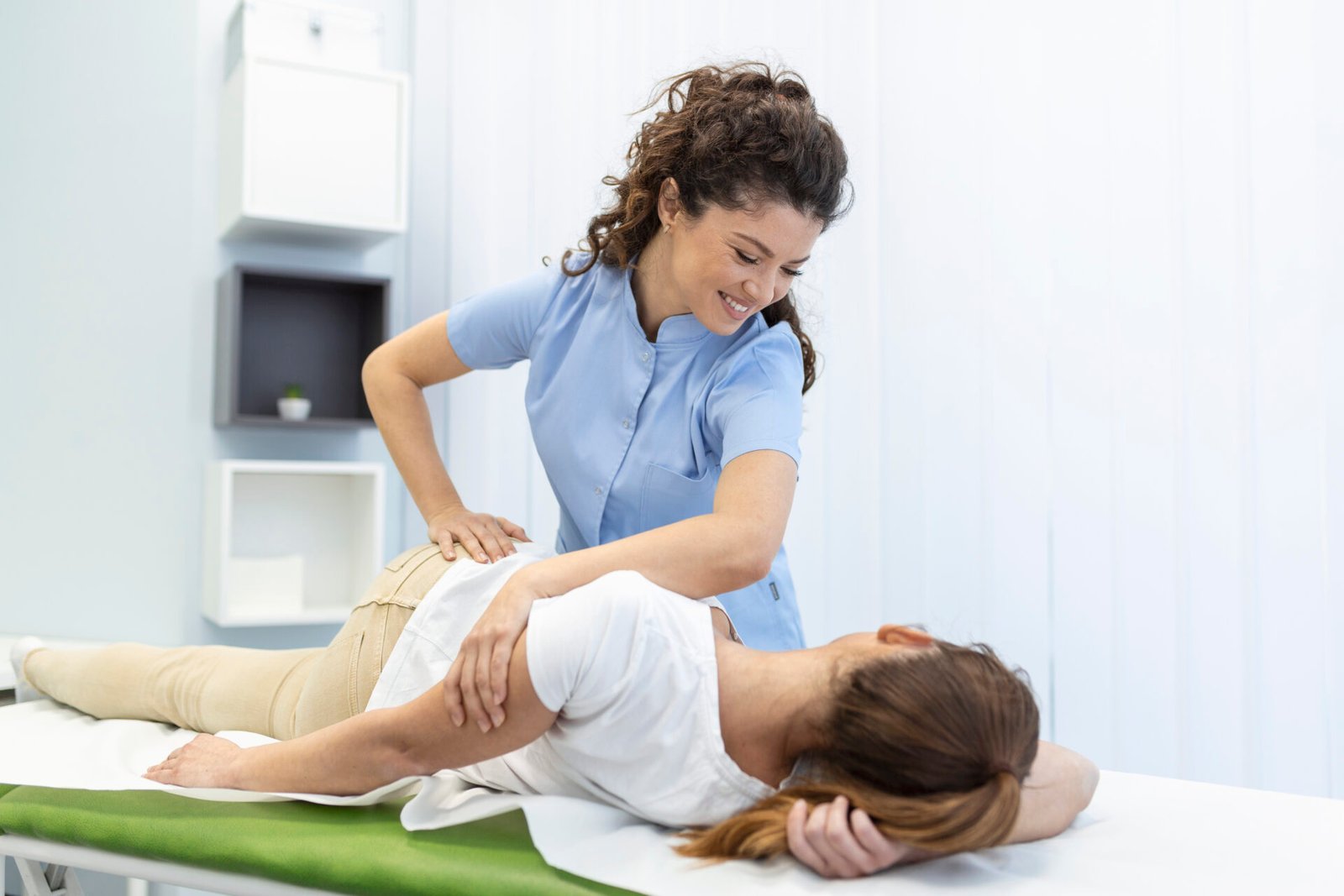
Targeted neuromusculoskeletal rehabilitation treats chronic pelvic issues by directly releasing hypertonic muscle groups, deactivating painful myofascial trigger points, and re-educating coordinated motion. This specialized physical medicine addresses the physical restrictions that trap local nerves and restrict healthy blood flow.
Addressing Pelvic Floor Muscle Hypertonicity
When pelvic tissues are subjected to prolonged stress, trauma, or visceral inflammation, the surrounding muscles frequently enter a protective state of permanent contraction. This condition, known as hypertonicity or an overactive pelvic floor, drastically diminishes local blood circulation and leads to tissue hypoxia. Over time, micro-tears in the muscle fibers form exquisitely tender nodules called myofascial trigger points.
During an internal digital palpation, a specialized therapist can isolate these restricted tissues within muscle groups like the levator ani or obturator internus. Manual therapies including Thiele intravaginal massage, myofascial release, and strain-counterstrain techniques are carefully applied to elongate these fibers and restore normal resting tone (Wallace et al., 2019). This targeted physical care serves as a fundamental pillar of any comprehensive pelvic pain treatment protocol.
Neuromuscular Re-Education and Biofeedback
Restoring proper physical function requires more than just manual soft-tissue release; the brain must relearn how to communicate with the pelvic floor. Specialized surface or internal biofeedback sensors measure involuntary muscle activity, displaying it visually or audibly for the patient (Wallace et al., 2019). This real-time feedback allows individuals to consciously recognize the difference between high-tone bracing and true, deep relaxation.
The Deep Core and Hip Connection
The pelvic floor does not function in isolation. It operates as the dynamic base of the deep core stabilization system, working in harmony with the diaphragm, multifidus, and transversus abdominis. Structural tightness or weakness in peripheral muscle groups such as the hip flexors, gluteals, and piriformis forces the pelvic basin to overcompensate, locking it into a painful, braced position. Comprehensive rehabilitation must incorporate targeted home stretching programs, including gentle hip openers like the happy baby, supported lunges, and child’s pose, to decompress the entire lumbopelvic region.
Pharmacological and Interventional Medical Therapies
Medical interventions for persistent pelvic distress utilize targeted prescription medications and specialized localized procedures to block aberrant nerve signals. This dual approach aims to reduce baseline inflammation while dampening the nervous system’s heightened sensitivity.
Neuropathic Pain Modulators
Standard analgesics, such as nonsteroidal anti-inflammatory drugs (NSAIDs), are rarely sufficient for managing long-term, non-cyclical pelvic conditions. When central sensitization takes hold, physicians turn to neuroleptics and specialized nerve modulators.
Medications like gabapentin and pregabalin work by stabilizing overactive sodium and calcium channels in the spinal cord, effectively reducing the volume of incoming pain signals (Jarrell et al., 2018). Additionally, low-dose tricyclic antidepressants (such as amitriptyline) are frequently prescribed; these agents enhance the availability of serotonin and norepinephrine, boosting the body’s natural, descending pain-inhibitory pathways.
Targeted Injections and Blocks
When specific somatic structures or peripheral nerves are identified as primary pain generators, interventional procedures can provide immediate, profound relief.
- Trigger Point Injections (TPIs): Local anesthetics (such as lidocaine), sometimes combined with a low-dose corticosteroid, are injected directly into palpable myofascial nodules to force the locked muscle fibers to release.
- Peripheral Nerve Blocks: Injections targeting the pudendal nerve, ilioinguinal nerve, or genitofemoral nerve can interrupt pain transmission along specific dermatomes, providing both diagnostic clarity and long-term therapeutic relief.
- Botulinum Toxin Type A (Botox): For severe, refractory muscle hypertonicity, localized Botox injections can be administered directly into the levator ani muscles to block acetylcholine release, inducing temporary, therapeutic muscle relaxation.
The Cross-System Impact: Mapping Visceral and Somatic Triggers
An accurate clinical assessment requires mapping how different organ systems interact, as conditions like endometriosis, interstitial cystitis, and irritable bowel syndrome frequently trigger overlapping symptoms. This clinical phenomenon, known as viscero-visceral hyperalgesia, occurs because the organs within the pelvic bowl share identical nerve pathways back to the spinal cord. Inflammation in the bladder can easily mimic or exacerbate inflammation in the uterus or bowel.
| Contributing Condition | Primary System Impacted | Common Clinical Signs | Key Interventional Target |
| Endometriosis / Adenomyosis | Reproductive / Gynecologic | Cyclical pain, deep dyspareunia, heavy bleeding | Hormonal suppression, laparoscopic excision |
| Interstitial Cystitis (BPS) | Urinary / Urologic | Urinary urgency, frequency, suprapubic pressure | Bladder instillations, dietary modifications |
| Myofascial Pain Syndrome | Musculoskeletal / Somatic | Focal trigger points, pain with movement, bracing | Manual physical therapy, trigger point injections |
| Irritable Bowel Syndrome | Gastrointestinal | Altered bowel habits, bloating, abdominal cramping | Visceral mobilization, dietary elimination |
To break this interconnected cycle, a patient’s plan of care must address both the internal visceral triggers and the secondary muscular bracing that invariably follows.
Re-Engineering the Approach: An Insider’s Look at Pelvic Recovery
The most effective strategy for resolving chronic pelvic issues involves shifting away from aggressive, invasive procedures toward non-invasive, structural down-training. Prioritizing early, specialized physical rehabilitation over exploratory surgeries prevents the development of secondary nerve hypersensitivity and avoids the formation of painful surgical adhesions.
The Pelvic Paradox: Why Traditional Strengthening Can Backfire
Here is a critical truth that is rarely discussed in standard medical brochures: If you are dealing with chronic pelvic pain, standard Kegel exercises and aggressive core “strengthening” workouts are likely making you worse. >
The vast majority of chronic pelvic pain cases involve hypertonic, overactive muscles that are already locked in a permanent, exhausted contraction. Forcing a hypertonic muscle to squeeze tighter via Kegels is like telling someone with a severe neck spasm to lift heavy weights. It increases tissue hypoxia, worsens nerve entrapment, and intensifies central sensitization. True recovery requires learning how to drop, lengthen, and release the pelvic floor before you ever attempt to strengthen it.
Integrating Cognitive Behavioral Tools and Mind-Body Strategies
Mind-body interventions manage chronic pelvic conditions by utilizing cognitive behavioral strategies to actively lower stress hormones and soothe the autonomic nervous system. Because psychological stress directly triggers pelvic muscle bracing, calming the mind is a physical necessity for structural healing.
The pelvic floor is incredibly responsive to emotional stress, anxiety, and past trauma. When the sympathetic nervous system (“fight-or-flight”) is chronically activated, the pelvic floor muscles instinctively brace to protect the core of the body. This continuous, unconscious tension perpetuates the cycle of pain and hypertonicity, often requiring physiotherapy treatment to restore healthy muscle function and relaxation.
Cognitive Behavioral Therapy (CBT) and mindfulness-based stress reduction (MBSR) are essential tools for rewiring this response. CBT helps patients identify and reframe “catastrophizing” thought patterns which naturally magnify pain sensations while teaching practical coping skills. Simultaneously, somatic mindfulness practices, such as progressive muscle relaxation and deep diaphragmatic breathing, actively stimulate the vagus nerve. This shifts the body into a parasympathetic state, sending a direct biological signal to the pelvic floor that it is safe to let go.
Building a Unified Path Toward Long-Term Wellness
[Multidisciplinary Care Team]
Medical Specialist (Neuropathic medications, hormone tracking)
Specialized Physical Therapist (Manual release, pelvic down-training)
Mental Health Professional (CBT, nervous system regulation)
No single specialist holds the complete key to resolving chronic pelvic issues. True, long-term healing requires a unified, multidisciplinary team where each expert addresses a different layer of the condition. For many individuals, beginning a specialized physiotherapy treatment protocol serves as the turning point, providing the physical foundation necessary for other medical interventions to succeed (van Reijn-Baggen et al., 2021).
If you are currently searching for a lasting solution, look for a comprehensive physiotherapy treatment provider who collaborates closely with open-minded physicians and pain specialists (van Reijn-Baggen et al., 2021). By combining targeted manual physical care, intelligent neurological support, and proactive nervous system regulation, you can break the cycle of chronic tension and reclaim control over your body and your life. True, sustainable comfort is entirely achievable when you treat the whole system rather than just the symptom.
