
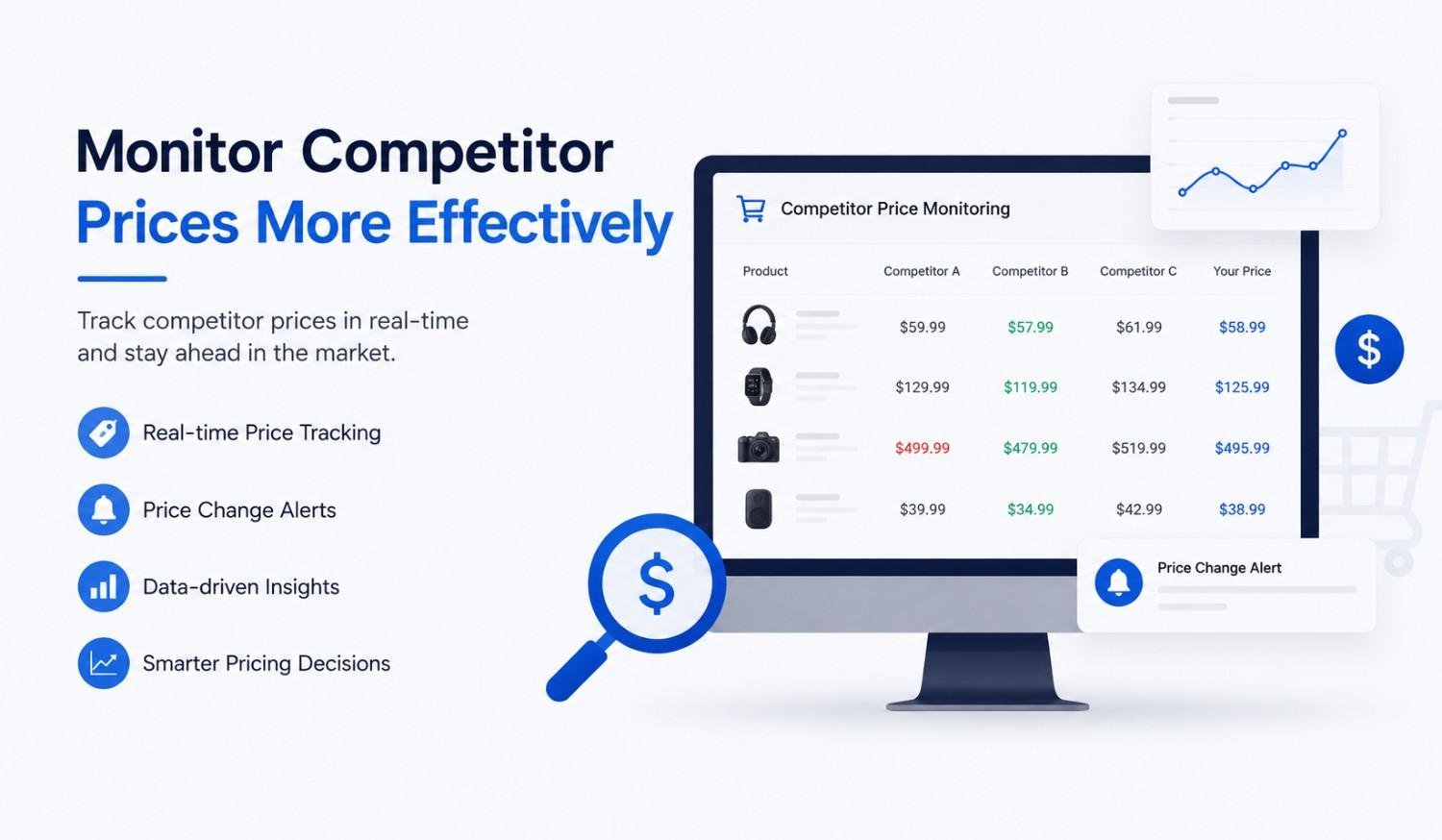
Pricing has always been a competitive battlefield, but today it moves faster than ever. Customers compare products across multiple websites in minutes, and competitors adjust prices just as quickly. Keeping pace manually can feel like trying to count raindrops during a storm. Businesses need accurate market intelligence to make informed decisions without spending entire days checking competitor websites. This is where web scraping services provide significant value. By collecting pricing data automatically, organizations gain visibility into market trends, competitor movements, and opportunities that help them stay competitive while protecting profit margins.
Why Competitor Price Monitoring Has Become a Business Necessity
Modern consumers have become skilled researchers. Before making a purchase, they often compare products, promotions, shipping costs, and discounts across several websites. Even a small price difference can influence buying decisions. Businesses that fail to monitor market pricing may unknowingly charge too much—or too little. Neither outcome is ideal. Competitive pricing is no longer a luxury reserved for large enterprises; it has become a necessity for businesses of all sizes. Accurate pricing intelligence helps companies remain relevant, attract customers, and avoid losing sales to better-informed competitors.
The Challenges of Manual Competitor Price Tracking
Manual price tracking sounds manageable until the number of products reaches hundreds or thousands. Teams often spend hours copying information into spreadsheets, checking websites repeatedly, and verifying whether promotions have changed. Along the way, mistakes inevitably occur. A missed discount or outdated price can quickly impact business decisions. We have observed teams opening dozens of browser tabs daily, almost earning honorary certifications in page refreshing. Unfortunately, spreadsheets rarely scale at the same speed as competitive markets. Manual monitoring consumes valuable resources while delivering limited visibility and slower response times.
Understanding How Web Scraping Collects Pricing Data
Web scraping automates the collection of publicly available information from websites. Instead of assigning employees to monitor competitor pages manually, automated systems gather relevant data and organize it into structured formats. Product prices, promotional offers, inventory status, and product specifications can all be captured efficiently. The process works continuously and consistently, reducing the risk of human error. More importantly, businesses gain access to reliable datasets that support strategic decisions. Rather than spending time gathering information, teams can focus on interpreting insights and planning actions that drive measurable results.
How Businesses Can Monitor Competitor Prices Automatically
Automation transforms competitor monitoring from a repetitive task into a strategic advantage. Businesses can monitor competitor prices automatically through customized scraping solutions that collect pricing updates at scheduled intervals. Instead of discovering changes days later, organizations receive timely information that allows them to react quickly. Promotional campaigns, seasonal discounts, flash sales, and product launches become easier to track. Markets rarely wait for lengthy meetings or spreadsheet reviews. Automated monitoring ensures decision-makers have current information available whenever pricing strategies need adjustment, helping organizations remain agile and responsive.
Real-Time Pricing Intelligence Leads to Better Decisions
Good decisions depend on good information—and timing matters just as much as accuracy. Real-time pricing intelligence allows businesses to identify market shifts as they happen rather than after opportunities have passed. When competitors adjust pricing strategies, organizations can evaluate the impact and respond appropriately. Faster access to pricing data reduces guesswork and strengthens decision-making across sales, marketing, and operations. Markets change quickly, but informed businesses are rarely caught by surprise. With timely insights available, companies can make strategic pricing adjustments that support both growth and profitability.
Beyond Pricing—Additional Competitive Insights Businesses Can Capture
Competitor prices tell only part of the story. Businesses can also collect information about product availability, inventory levels, customer reviews, promotional campaigns, and new product launches. These insights create a broader picture of market activity and competitor behavior. A competitor lowering prices may indicate excess inventory, while frequent stock shortages could signal strong demand. Looking beyond pricing helps organizations understand why changes occur rather than simply reacting to them. Better context leads to better decisions—and fewer moments of wondering what happened after a competitor suddenly changed direction.
How Web Scraping Supports Dynamic Pricing Strategies
Dynamic pricing relies on market conditions, demand fluctuations, and competitor activity. Without accurate data, dynamic pricing becomes little more than educated guessing. Automated data collection provides the visibility needed to adjust pricing confidently and strategically. Businesses can respond to market movements while maintaining healthy margins and competitive positioning. Not every situation requires aggressive discounts, and not every competitor action deserves a reaction. Data-driven pricing helps organizations distinguish between meaningful trends and temporary fluctuations. The result is a pricing strategy guided by evidence rather than assumptions or panic-driven decisions.
Industries That Benefit Most from Automated Price Monitoring
Many industries depend on accurate pricing intelligence, though the reasons may differ. eCommerce retailers track thousands of products across multiple competitors. Travel companies constantly monitor changing rates and promotions. Consumer electronics businesses face highly competitive pricing environments where even small differences matter. Automotive suppliers compare pricing across distributors and marketplaces. Manufacturers use market data to strengthen distributor relationships and improve forecasting. Regardless of industry, the common challenge remains the same: staying informed without dedicating excessive time and resources to collecting competitor information manually.
Common Obstacles Businesses Face When Gathering Competitor Data
Collecting competitor information at scale is not always straightforward. Websites change layouts, introduce anti-bot protections, and update structures without notice. Data quality issues can emerge when information is incomplete or inconsistent. Businesses often discover that gathering data is easier than maintaining reliable access to it over time. We have seen organizations build simple monitoring systems only to spend months repairing them after website updates. Sustainable data collection requires expertise, monitoring, and ongoing maintenance. Reliable competitive intelligence depends on consistency as much as technology.
Turning Raw Data into Actionable Business Intelligence
Data alone does not create value; interpretation does. Pricing information becomes useful when businesses transform it into dashboards, reports, alerts, and strategic recommendations. Patterns begin to emerge, helping decision-makers identify opportunities and risks before they become obvious. Historical trends reveal competitor behavior, while real-time monitoring highlights immediate changes. Effective business intelligence turns thousands of data points into clear actions. Rather than asking what competitors did yesterday, organizations can focus on what they should do next. That shift from observation to action often creates the greatest competitive advantage.
Choosing the Right Web Scraping Partner
Successful competitor monitoring requires more than collecting data. Businesses need solutions that deliver accuracy, scalability, reliability, and long-term support. A capable development partner understands data extraction challenges, compliance considerations, and integration requirements. Pricing intelligence becomes far more valuable when connected with existing CRM, ERP, and analytics systems. Choosing the right provider means evaluating technical expertise alongside business understanding. Technology should solve problems rather than create new ones. Reliable implementation helps organizations focus on strategy while trusted systems handle the complexities of data collection behind the scenes.
The Future of Competitor Price Monitoring
Competitive intelligence continues to evolve alongside advances in automation and artificial intelligence. Future systems will not only collect pricing information but also identify patterns, predict trends, and recommend actions. Businesses increasingly expect insights instead of raw data. Automated alerts, predictive analytics, and machine learning models will make pricing strategies more proactive than reactive. Organizations that embrace these capabilities will gain stronger market visibility and faster decision-making. As competition intensifies, access to timely and actionable intelligence will become an increasingly important factor in maintaining long-term success.
Conclusion
Competitive pricing is no longer about checking a few websites and updating a spreadsheet once a week. Modern markets move faster, customer expectations continue rising, and competitors rarely stand still. Automated data collection provides businesses with the visibility needed to make informed pricing decisions and respond confidently to changing conditions. The goal is not simply collecting more information—it is creating smarter strategies through better insights. After all, successful businesses should spend their time growing revenue and serving customers, not endlessly refreshing competitor product pages hoping for updates.
FAQs
1. What is competitor price monitoring?
Competitor price monitoring is the process of tracking pricing changes, discounts, and promotional offers from competing businesses to support informed pricing decisions.
2. How does web scraping help collect pricing information?
Web scraping automatically gathers publicly available pricing data from websites and organizes it into structured formats for analysis.
3. Is competitor price monitoring legal?
Monitoring publicly available information is generally permitted, but businesses should follow applicable regulations and website terms of service.
4. How often should competitor prices be tracked?
The frequency depends on the industry. Highly competitive sectors may require hourly monitoring, while others may benefit from daily or weekly tracking.
5. Can web scraping track discounts and promotional offers?
Yes. Automated systems can capture sale prices, limited-time promotions, bundled offers, and other pricing-related information.
6. Which industries benefit most from competitor price monitoring?
eCommerce, travel, manufacturing, automotive, consumer electronics, and retail businesses commonly benefit from automated price intelligence.
7. Can pricing intelligence improve profit margins?
Yes. Accurate market data helps businesses avoid unnecessary discounts while maintaining competitive pricing strategies.
8. Why use professional web scraping solutions instead of manual tracking?
Professional solutions provide greater accuracy, scalability, automation, and long-term reliability compared to manual monitoring methods.
