
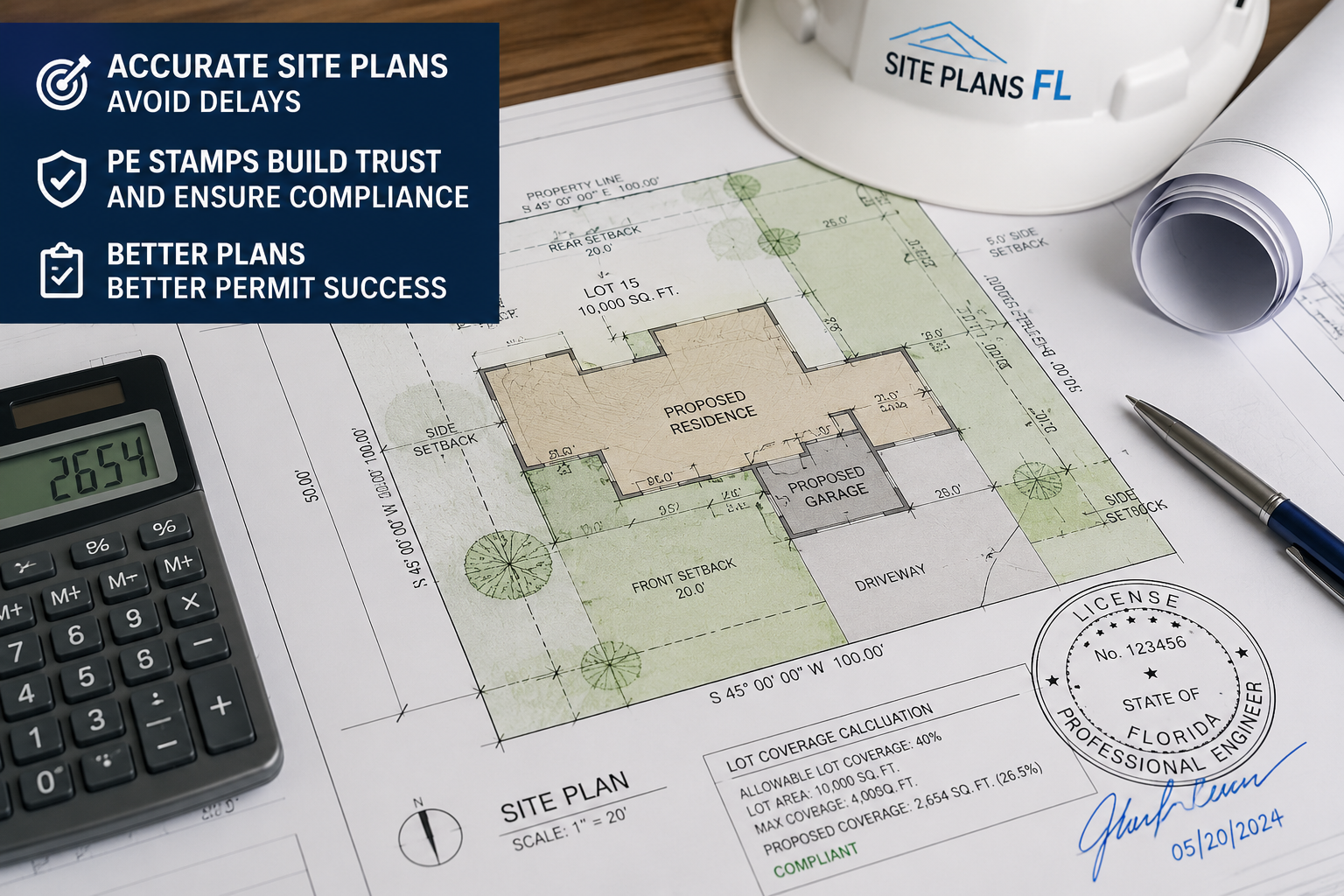
Obtaining a building permit in Florida can be a challenging process, especially when incomplete or inaccurate documentation causes delays. Whether you’re planning a new shed, pool, ADU, home addition, or commercial project, the quality of your site plan plays a critical role in determining how quickly your permit application moves through review.
One of the most effective ways to increase approval chances is by submitting accurate Florida permit site plans prepared by professionals who understand local requirements. When combined with engineering review and a Professional Engineer (PE) stamp when required, a well-prepared site plan can significantly reduce permit rejections and costly revisions.
In this guide, we’ll explain why accurate site plans matter, how PE stamps contribute to permit success, and why professional permit drawing services are a smart investment for property owners and contractors.
Why Site Plans Are Essential for Permit Approval
A site plan provides a detailed visual representation of your property and proposed construction project. Local building departments use this document to verify that your project complies with zoning regulations, setback requirements, lot coverage limits, easements, drainage considerations, and other municipal codes.
An effective site plan typically includes:
- Property boundaries
- Existing structures
- Proposed structures
- Setback measurements
- Driveways and access points
- Utility locations
- Easements
- Dimensions and scale references
When site plans contain errors, missing information, or inaccurate measurements, permit reviewers often issue corrections or deny the application altogether. These delays can add weeks—or even months—to a project timeline.
Professional Florida permit site plans help eliminate these common issues by ensuring all required information is accurately documented before submission.
Common Reasons Permit Applications Get Rejected
Many permit applications are delayed because applicants underestimate the importance of accurate drawings. Some of the most common issues include:
Incorrect Property Dimensions
Even small measurement errors can create compliance issues. Inaccurate property boundaries or setback calculations often trigger requests for revisions.
Missing Structures or Improvements
Existing sheds, pools, patios, driveways, and other site features must be accurately shown. Omissions can create conflicts during review.
Zoning Compliance Issues
Municipalities verify that proposed structures comply with local zoning regulations. Missing setback information frequently causes permit delays.
Incomplete Documentation
Many homeowners attempt to create site plans themselves using outdated surveys or rough sketches. While this may seem cost-effective initially, it often leads to costly revisions and longer approval timelines.
Professional permit drawing services help avoid these issues by producing permit-ready plans that meet local requirements.
The Importance of Calculating Lot Coverage Correctly
One frequently overlooked aspect of permit approval is calculating lot coverage. Most Florida jurisdictions limit the percentage of a property that can be covered by buildings and impervious surfaces.
Lot coverage calculations help determine whether your project complies with local zoning regulations. If your proposed addition, shed, garage, or accessory structure causes the property to exceed maximum coverage limits, permit approval may be denied.
Accurate lot coverage calculations involve:
- Total lot area measurement
- Existing building footprints
- Proposed structure footprints
- Impervious surface calculations
- Local zoning limitations
Because regulations vary between municipalities, property owners often miscalculate coverage limits. Professional site plan providers use accurate measurements and local code requirements to ensure compliance before permit submission.
By properly calculating lot coverage, applicants can identify potential issues early and make design adjustments before encountering permit review problems.
How PE Stamps Strengthen Permit Applications
A Professional Engineer (PE) stamp serves as official verification that certain plans and calculations have been reviewed by a licensed engineer.
Many Florida jurisdictions require PE-stamped documents for specific project types, including:
- Structural modifications
- Commercial developments
- Large accessory structures
- Certain residential additions
- Engineering-related site improvements
A PE stamp demonstrates that technical aspects of the project meet applicable engineering standards and code requirements.
Benefits of PE-stamped plans include:
- Increased reviewer confidence
- Improved code compliance
- Reduced permit corrections
- Faster review cycles
- Greater project credibility
When engineering review is required, submitting plans without the necessary PE stamp can result in immediate rejection. Working with experienced professionals helps ensure all required documentation is prepared correctly from the beginning.
Benefits of Professional Permit Drawing Services
While online mapping tools and hand-drawn sketches may seem sufficient, professional permit drawing services offer significant advantages throughout the permitting process.
Higher Accuracy
Professional drafters use reliable property information, surveys, GIS data, and municipal requirements to create accurate plans.
Faster Turnaround
Experienced permit specialists understand what reviewers expect and can prepare permit-ready documentation efficiently.
Reduced Permit Revisions
Well-prepared plans minimize requests for corrections, helping projects move through review faster.
Local Code Knowledge
Florida’s permitting requirements vary by county and municipality. Professional providers understand these differences and prepare plans accordingly.
Cost Savings
Although professional drawings require an upfront investment, they often save money by reducing delays, resubmissions, and project interruptions.
For homeowners, contractors, and developers alike, professional permit drawings are one of the most effective ways to streamline the approval process.
Choosing the Right Site Plan Provider
Not all site plan providers offer the same level of expertise. When selecting a company, look for:
- Experience with Florida permitting requirements
- Knowledge of local zoning regulations
- Fast turnaround times
- Engineering support when needed
- Clear communication throughout the process
- Proven success with permit submissions
A reliable provider will understand the specific documentation required by local building departments and help ensure your application is complete before submission.
Final Thoughts
Permit approval starts with accurate documentation. Whether you’re building a shed, home addition, ADU, pool, garage, or commercial structure, professionally prepared Florida permit site plans can significantly improve your chances of first-round approval.
Accurate measurements, proper setback verification, precise calculating lot coverage, and expert permit drawing services all contribute to a smoother permitting experience. When engineering review is required, PE-stamped plans provide an additional layer of compliance and credibility that reviewers trust.
Investing in professional site plans today can save valuable time, reduce costly revisions, and help keep your project moving forward without unnecessary delays.
Need permit-ready site plans for your Florida project? Site Plans FL provides accurate site plans, zoning analysis, lot coverage calculations, and PE stamp support to help you submit with confidence.
