
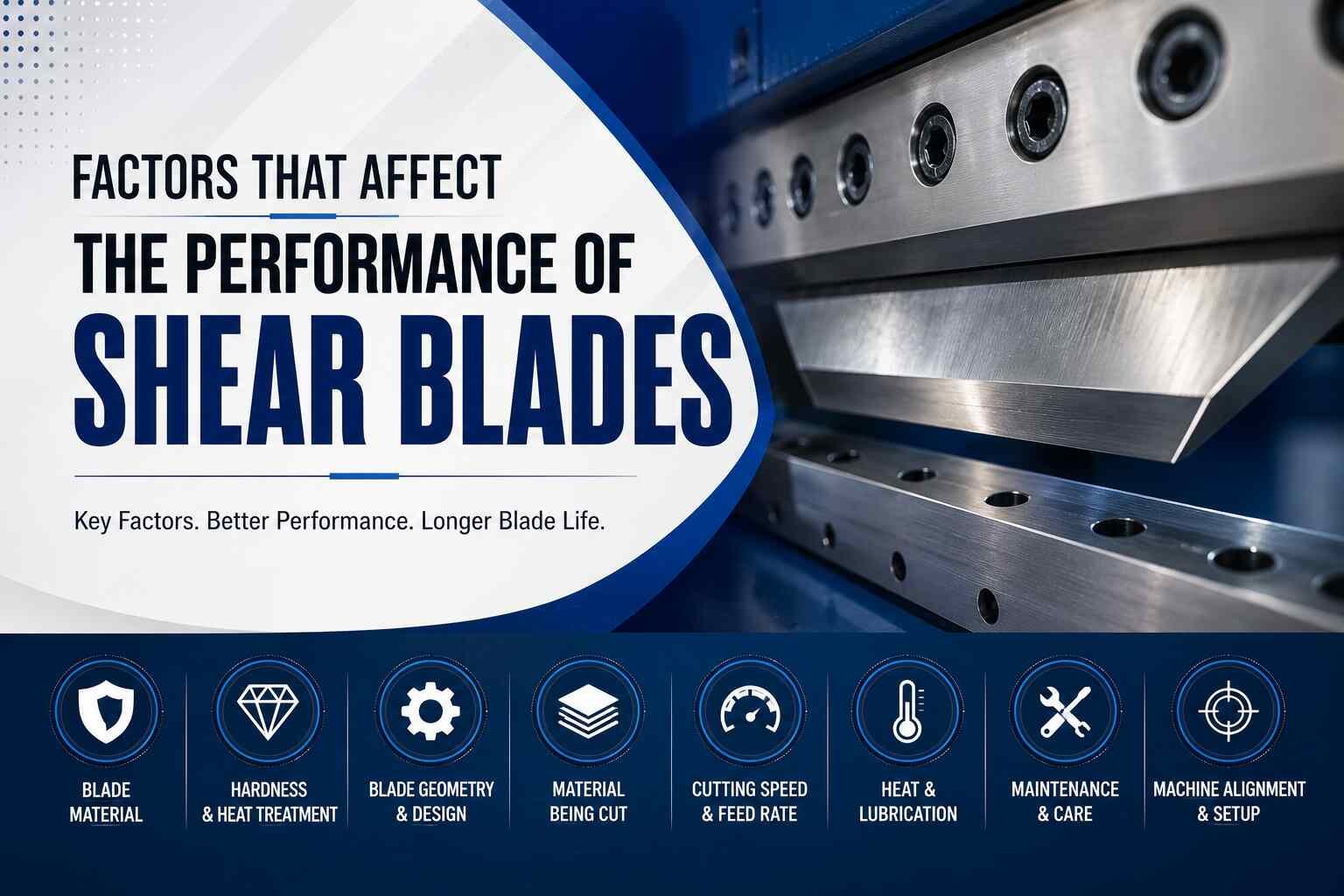
In modern manufacturing and metal processing operations, cutting precision is essential for maintaining product quality, reducing waste, and maximizing productivity. Whether used in sheet metal fabrication, recycling, paper converting, or industrial processing, shear blades play a critical role in delivering clean and accurate cuts. However, blade performance is influenced by several factors that directly affect cutting efficiency, blade life, and overall operational costs.
Understanding these factors can help manufacturers optimize their production processes, minimize downtime, and achieve consistent cutting results. By selecting the right blade materials, maintaining proper operating conditions, and following best practices, businesses can significantly improve the performance of their cutting equipment.
1. Blade Material Quality
One of the most important factors affecting blade performance is the material used in manufacturing the blade itself. Different industrial applications require blades with specific hardness, toughness, and wear resistance properties.
Common materials used for manufacturing shear blades include:
➜ D2 Tool Steel
➜ D3 Tool Steel
➜ High-Speed Steel (HSS)
➜ Alloy Steel
➜ Tungsten Carbide
Each material offers unique advantages depending on the cutting application. For example, D2 steel provides excellent wear resistance, while HSS is ideal for high-speed operations requiring superior edge retention.
Using the correct blade material ensures longer service life and better cutting performance, especially when processing hard or abrasive materials.
2. Blade Hardness
Hardness is a critical characteristic that directly impacts cutting efficiency and durability. Blades that are too soft wear out quickly, while excessively hard blades may become brittle and susceptible to chipping.
The ideal hardness level depends on:
- Material being cut
- Production speed
- Cutting force requirements
- Environmental conditions
Manufacturers carefully control heat treatment processes to achieve the optimal balance between hardness and toughness. Properly hardened shear blades maintain sharp cutting edges longer and produce cleaner cuts throughout their service life.
3. Cutting Edge Geometry
Blade geometry significantly influences cutting quality and efficiency. Factors such as edge angle, bevel design, and blade thickness determine how effectively the blade penetrates and cuts material.
Common blade edge designs include:
- Single bevel edges
- Double bevel edges
- Razor edges
- Custom-profile edges
Selecting the appropriate geometry helps reduce cutting resistance and improves cut quality. Improper blade geometry can increase friction, generate excessive heat, and accelerate blade wear.
For specialized applications, customized blade profiles may provide superior performance compared to standard designs.
4. Material Being Processed
Different materials place varying levels of stress on cutting equipment. Soft materials generally require less cutting force, while harder or abrasive materials can significantly increase blade wear.
Common materials processed with industrial cutting systems include:
- Stainless steel
- Aluminum
- Copper
- Brass
- Paper
- Plastic films
- Rubber
- Textiles
The characteristics of the material being cut influence blade selection, maintenance schedules, and expected service life. Matching blade specifications to application requirements is essential for achieving optimal performance.
5. Machine Alignment and Setup
Even the highest-quality blade cannot perform effectively if the cutting equipment is improperly aligned. Machine setup plays a crucial role in ensuring accurate cuts and maximizing blade longevity.
Important alignment factors include:
- Blade clearance
- Blade overlap
- Parallel alignment
- Machine rigidity
- Feed system accuracy
Incorrect alignment can lead to uneven wear patterns, poor cut quality, and premature blade failure. Regular inspection and calibration of cutting equipment help maintain consistent operating conditions.
6. Cutting Speed
Production speed has a direct impact on blade performance. While high-speed operations can increase productivity, they also generate additional heat and stress on cutting edges.
Manufacturers must balance production demands with blade durability. Operating at excessively high speeds may result in:
- Faster edge wear
- Increased friction
- Heat buildup
- Reduced cutting accuracy
- More frequent blade replacements
Finding the optimal cutting speed for each application helps maximize efficiency while preserving blade integrity.
7. Heat Generation
Heat is one of the leading causes of blade degradation. Excessive temperatures can soften cutting edges, alter blade properties, and reduce overall performance.
Heat generation often results from:
- High cutting speeds
- Improper blade geometry
- Insufficient lubrication
- Excessive friction
- Incorrect machine settings
Proper cooling and lubrication systems can significantly reduce operating temperatures and extend blade life. Maintaining controlled cutting conditions ensures consistent performance over long production runs.
8. Blade Maintenance Practices
Regular maintenance is essential for preserving blade performance and preventing costly downtime. Neglecting maintenance can lead to poor cut quality and premature replacement costs.
Recommended maintenance practices include:
➜ Routine inspection
➜ Blade cleaning
➜ Edge sharpening
➜ Alignment verification
➜ Proper storage
Scheduled maintenance programs help identify wear issues before they affect production quality. Well-maintained shear blades consistently deliver superior cutting performance and longer service life.
9. Blade Coatings and Surface Treatments
Advanced coatings have become increasingly popular in modern manufacturing because they improve blade durability and performance.
Common coating options include:
- Titanium Nitride (TiN)
- Titanium Carbonitride (TiCN)
- Chromium coatings
- Specialty wear-resistant coatings
These surface treatments help reduce friction, improve wear resistance, and protect against corrosion. Coated blades often provide longer operating life in demanding industrial environments.
10. Operator Expertise
Human factors also influence cutting performance. Skilled operators understand how to properly set up equipment, monitor blade condition, and identify potential issues before they escalate.
Operator training contributes to:
- Improved machine efficiency
- Better cut quality
- Reduced downtime
- Enhanced workplace safety
- Longer blade lifespan
Investing in proper training ensures that equipment and blades are used according to manufacturer recommendations.
Conclusion
The performance of industrial cutting systems depends on a combination of factors, including blade material, hardness, geometry, machine alignment, operating speed, and maintenance practices. Understanding these variables allows manufacturers to optimize cutting operations and achieve consistent production results.
High-quality shear blades deliver the best performance when paired with proper setup, regular maintenance, and application-specific specifications. By carefully managing these factors, manufacturers can improve productivity, reduce operational costs, and extend equipment life.
As industries continue to demand higher levels of precision and efficiency, investing in premium shear blades and following best maintenance practices remains essential for long-term manufacturing success.
