
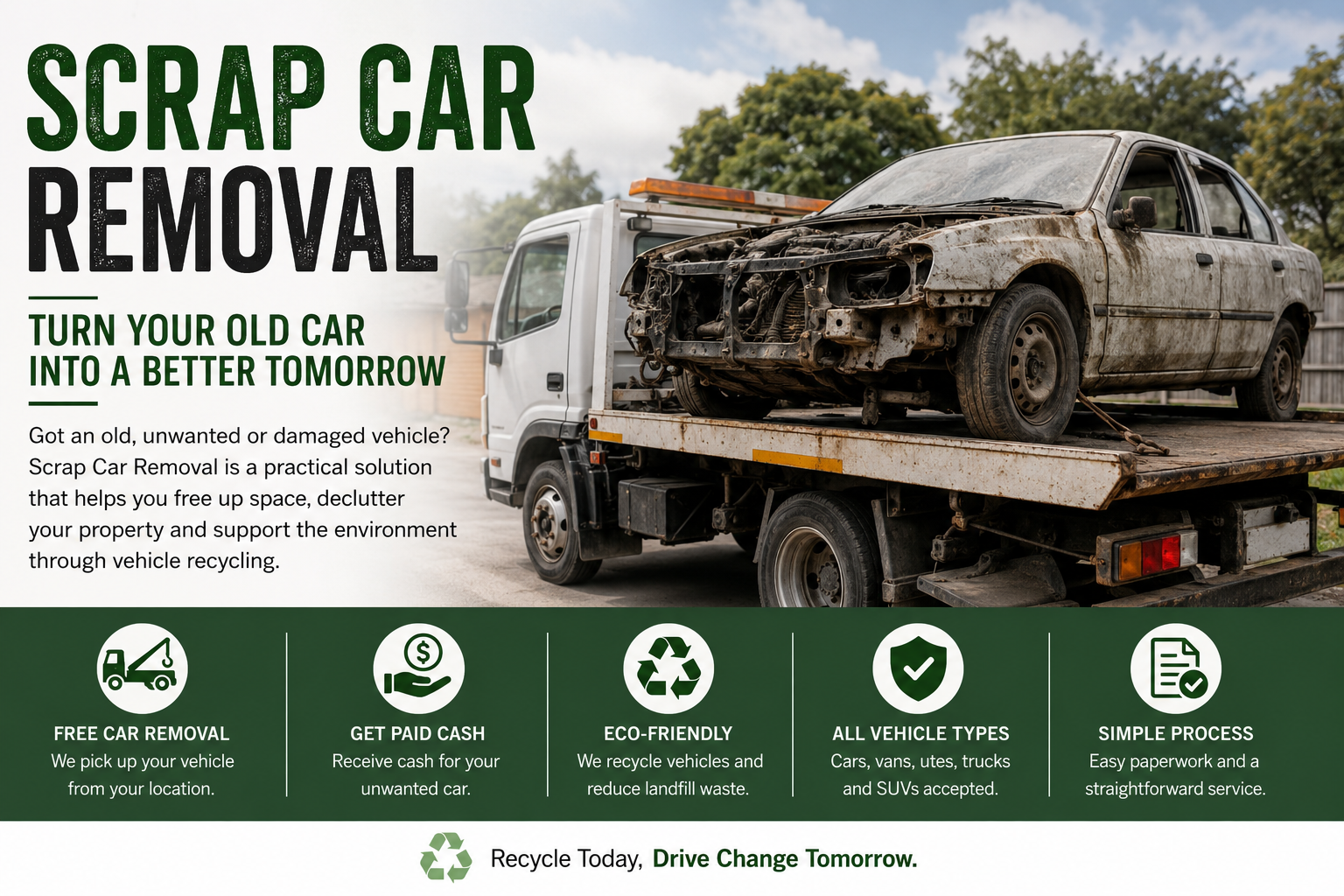
Old vehicles often end up sitting in garages, driveways, or backyards for months or even years. They take up space, gather dust, and can become harder to deal with as time passes. Many owners eventually start looking into Scrap Car Removal because it offers a practical way to deal with cars that are no longer worth keeping.
If you are thinking about removing an unwanted vehicle, it is worth learning how the process works and what steps to take before making a decision. You can also find more information from local providers by visiting https://canberracash4cars.com.au/
Whether a car has reached the end of its life after an accident or simply no longer runs as expected, vehicle recycling can keep useful materials in circulation. Many people also search for old car recycling services when they want to clear unused vehicles from their property without leaving them to deteriorate further.
What Is Scrap Car Removal?
Scrap Car Removal is the process of collecting vehicles that are no longer suitable for normal road use and sending them for dismantling or recycling. Instead of allowing an unwanted car to rust away, many of its parts and raw materials can be recovered.
The vehicle may be inspected first, followed by the removal of fluids, reusable components, and recyclable metals. Items such as steel, aluminium, batteries, and tyres may be processed through different recycling methods depending on their condition.
Why People Decide to Remove Old Cars
Every vehicle reaches a point where repairs become difficult or ongoing maintenance no longer makes sense. Some common reasons include:
Mechanical Problems
A major engine or transmission issue can leave a car parked for long periods.
Accident Damage
Some vehicles suffer structural damage that makes repairs impractical.
Registration Has Expired
Cars left unregistered for months may simply remain unused until owners decide to remove them.
Lack of Storage Space
An unused vehicle can occupy valuable room that could be used for parking or other purposes.
Environmental Concerns
Many owners prefer recycling instead of leaving leaking fluids or deteriorating materials exposed to the environment.
How Vehicle Recycling Works
Once collected, vehicles usually enter a dismantling facility where different materials are separated.
Inspection
Workers identify reusable components and hazardous materials.
Fluid Removal
Fuel, coolant, engine oil, and other liquids are drained and handled according to environmental requirements.
Parts Recovery
Components such as wheels, alternators, mirrors, and doors may be suitable for reuse.
Metal Processing
The remaining shell is crushed or shredded so metals can be sorted and recycled for future manufacturing.
Preparing Your Vehicle Before Collection
A little preparation can make the process easier.
Remove Personal Belongings
Check the glove box, boot, centre console, and under seats for forgotten items.
Collect Important Documents
Keep registration papers or ownership records in a safe place if needed.
Remove Custom Accessories
If you want to keep items such as roof racks or aftermarket audio equipment, remove them before collection where appropriate.
Check for Spare Keys
Gather all keys connected with the vehicle to avoid confusion later.
Environmental Importance of Recycling Cars
Millions of tonnes of metal are reused every year through vehicle recycling. Recovering materials from old cars reduces demand for newly mined resources and lowers waste entering landfill sites.
Many components can serve another purpose after processing. Steel may return to manufacturing industries, while batteries and catalytic converters often undergo specialised recycling methods.
Responsible disposal also reduces the risk of fluids leaking into soil or waterways after long periods of neglect.
Documents That May Be Required
Requirements vary between locations, but owners are often asked to provide proof that they have the right to dispose of the vehicle.
Examples include:
- Identification documents
- Registration papers if available
- Proof of ownership
- Any paperwork requested under local regulations
Checking requirements in advance can avoid delays.
Choosing a Local Service
When researching Scrap Car Removal options, it helps to compare how different businesses operate.
Look at factors such as:
- Collection areas
- Vehicle types accepted
- Operating hours
- Recycling practices
- Information provided before collection
Understanding these details allows owners to make informed decisions based on their own circumstances.
A Local Example
One business that operates in this space is Canberra Cash 4 Cars. Information about its services, vehicle collection process, and service areas can be found on allowing owners to review details before deciding whether it matches their needs.
Common Vehicles Sent for Recycling
Many different vehicle types may qualify for removal, including:
- Sedans
- Hatchbacks
- SUVs
- Utilities
- Vans
- Four-wheel drives
- Light commercial vehicles
Condition often varies from running cars to vehicles with severe mechanical or accident damage.
Myths About Old Vehicle Removal
Every Old Car Is Worth Repairing
Some repairs cost far more than the remaining practical use of the vehicle.
Only Completely Wrecked Cars Can Be Recycled
Many vehicles that still run eventually enter recycling once owners choose not to keep them.
Nothing Gets Reused
In reality, numerous components and raw materials can be recovered before the remaining shell is processed.
Questions People Often Ask
Can a non-running vehicle still be removed?
Yes. Many old vehicles being recycled no longer start or drive.
What happens to reusable parts?
Suitable components may be separated and prepared for reuse where appropriate.
Is recycling limited to very old cars?
No. Vehicles of many ages may enter recycling due to accident damage, mechanical issues, or owner preference.
Final Thoughts
Keeping an unused vehicle parked for years rarely solves the problem. Exploring Scrap Car Removal can help owners understand practical ways to deal with unwanted cars while supporting the recovery of reusable materials. Learning about recycling methods, preparing documents, and clearing personal belongings before collection can make the process easier and reduce unnecessary delays.
