
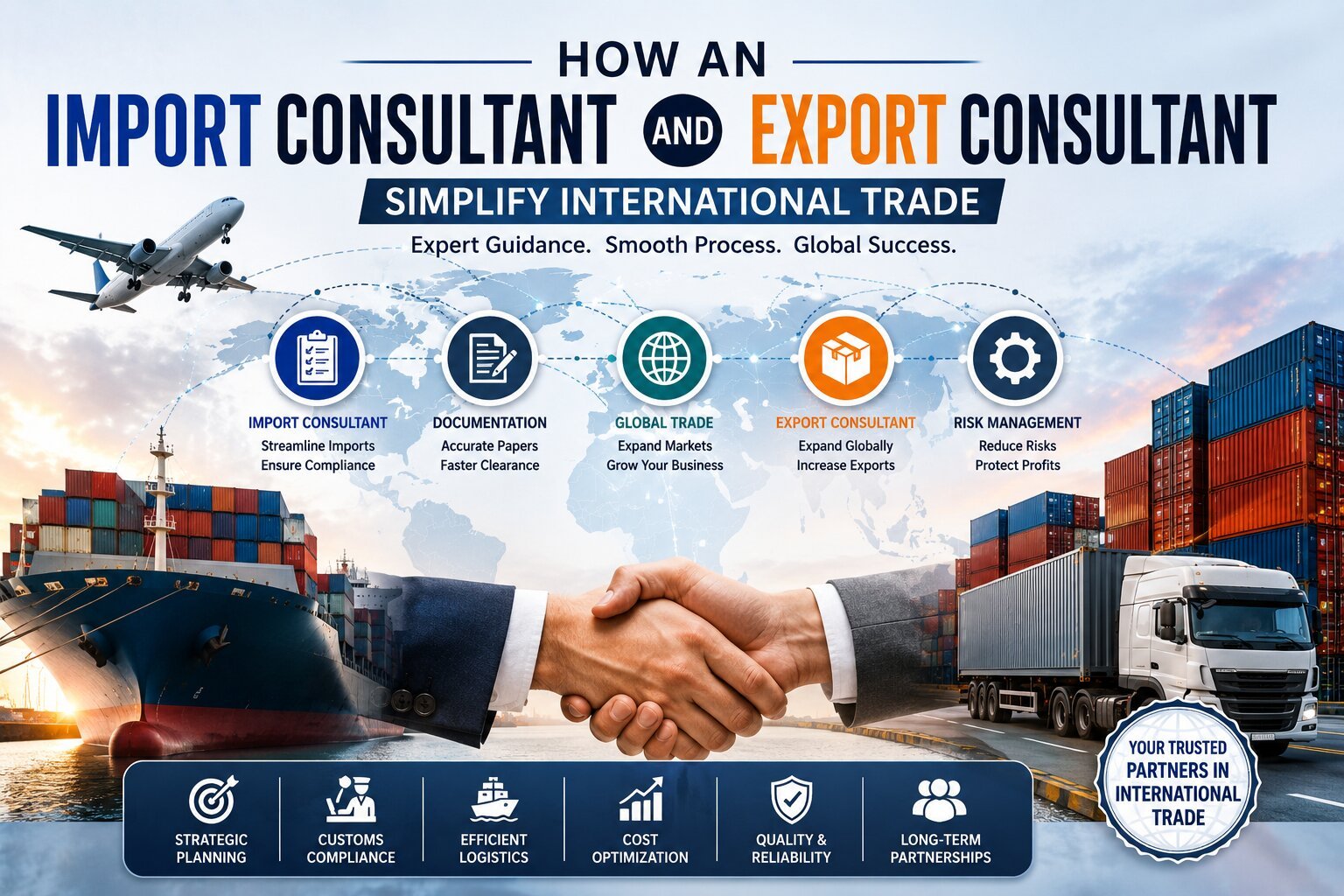
Introduction: Global Trade Is Full of Opportunities—and Challenges
The modern business world is no longer limited by geography. A manufacturer in one country can source raw materials from another continent, while a retailer can sell products to customers thousands of miles away. Technology, improved logistics, and digital communication have made international trade more accessible than ever before.
Yet expanding across borders is rarely simple. Every shipment involves regulations, documentation, customs procedures, taxes, logistics planning, supplier coordination, and risk management. A single mistake can delay deliveries, increase costs, or create compliance issues.
This is why businesses increasingly rely on an Import consultant and an export consultant to simplify international trade. These professionals help companies understand complex trade requirements, reduce operational risks, and create efficient global business strategies.
Whether a company is importing machinery, sourcing raw materials, or exporting finished products, expert guidance can transform a complicated process into a structured and manageable operation.
This article explains how these specialists simplify international trade and why they have become valuable partners for businesses that want sustainable global growth.
Understanding International Trade
International Trade Is More Than Buying and Selling
Many people believe international trade simply means purchasing goods from one country and selling them in another. In reality, every transaction involves multiple processes that must work together.
These include:
- Product sourcing
- Supplier negotiations
- Shipping arrangements
- Customs documentation
- Regulatory compliance
- Tax calculations
- Risk management
- Currency considerations
Managing all these elements requires planning and expertise.
An Import consultant and an export consultant help businesses coordinate these activities efficiently.
What Does an Import Consultant Do?
Simplifying the Import Process
An Import consultant helps businesses purchase and bring products into their country while complying with applicable regulations.
Their responsibilities often include:
- Identifying import requirements
- Reviewing documentation
- Advising on customs procedures
- Evaluating suppliers
- Managing logistics strategies
- Reducing operational risks
Their objective is to help businesses receive products efficiently while minimizing delays and unexpected costs.
What Does an Export Consultant Do?
Supporting International Expansion
An export consultant assists businesses that want to sell products in international markets.
Their work may involve:
- Market research
- Export planning
- Compliance guidance
- Distribution strategy
- Documentation support
- International pricing analysis
Rather than simply shipping products overseas, they help businesses develop sustainable international growth strategies.
Why Businesses Need Both Experts
Imports and Exports Work Together
Many companies both import and export products.
For example:
- Manufacturers import components and export finished goods.
- Retailers import inventory from overseas suppliers.
- Distributors purchase internationally and sell globally.
Having both an Import consultant and an export consultant creates a more coordinated international trade strategy.
Reducing Complexity
International trade involves multiple government agencies, logistics providers, suppliers, and customers.
Professional guidance helps businesses simplify:
- Documentation
- Scheduling
- Supplier coordination
- Compliance
- Transportation planning
Simplification improves operational efficiency.
Understanding Compliance
Regulations Differ Across Countries
Every country has different requirements regarding:
- Product standards
- Labeling
- Packaging
- Safety certifications
- Customs declarations
Ignoring these requirements can result in delays or penalties.
An Import consultant helps businesses understand import regulations, while an export consultant helps ensure export compliance.
Customs Documentation
Accuracy Matters
International shipments require detailed documentation such as:
- Commercial invoices
- Packing lists
- Certificates of origin
- Bills of lading
- Import permits when required
Small errors may delay shipments.
Professional guidance improves documentation accuracy and reduces administrative problems.
Supplier Evaluation
Selecting Reliable Partners
Successful international trade depends on reliable suppliers.
Businesses should evaluate:
- Production capacity
- Communication quality
- Delivery performance
- Quality control
- Financial stability
An Import consultant helps businesses assess suppliers before long-term commitments are made.
Market Research for Export Success
Understanding Customer Demand
Entering new markets without research creates unnecessary risk.
Businesses should understand:
- Customer preferences
- Local competition
- Pricing expectations
- Market size
- Consumer trends
An export consultant helps companies analyze these factors before expansion.
Building Effective Trade Strategies
Planning Before Action
International growth should follow a structured strategy.
Businesses should define:
- Objectives
- Target markets
- Product positioning
- Distribution channels
- Pricing models
Strategic planning improves long-term success.
Logistics Management
Coordinating International Movement
Global shipments require coordination among:
- Manufacturers
- Freight companies
- Customs authorities
- Warehouses
- Final customers
Poor coordination increases costs and delays.
Professional planning helps create efficient logistics systems.
Cost Control
Understanding Total Import Costs
Businesses must consider:
- Product costs
- Freight charges
- Insurance
- Customs duties
- Taxes
- Storage fees
An Import consultant helps calculate total landed costs for better decision-making.
Risk Management
Every International Transaction Has Risks
Potential risks include:
- Supplier failure
- Shipping delays
- Currency fluctuations
- Regulatory changes
- Political uncertainty
Planning ahead reduces operational disruption.
An export consultant and an Import consultant help businesses identify and manage these risks.
Technology in International Trade
Digital Solutions Improve Efficiency
Modern businesses use technology for:
- Shipment tracking
- Inventory management
- Document storage
- Communication
- Analytics
Technology supports faster and more accurate decision-making.
Supply Chain Optimization
Strong Supply Chains Support Growth
Efficient supply chains create:
- Better inventory control
- Faster delivery
- Lower costs
- Improved customer satisfaction
Professional guidance strengthens supply chain performance.
Small Businesses Benefit Too
Expertise Is Not Only for Large Companies
Many small businesses assume consultants are only useful for multinational corporations.
In reality, smaller companies often benefit even more because they have fewer internal resources for managing international trade.
Common Misconceptions
“International Trade Is Simple”
Successful global trade requires planning, compliance, and coordination.
“Experience Alone Is Enough”
Markets evolve continuously.
Professional expertise helps businesses stay informed.
“One Strategy Fits Every Market”
Every country has unique regulations and customer expectations.
Customized strategies produce better results.
Long-Term Business Growth
Sustainable Expansion
An export consultant helps businesses identify markets with long-term potential rather than temporary opportunities.
An Import consultant helps maintain reliable sourcing strategies that support continued growth.
Together, they contribute to stronger international operations.
The Future of International Trade
Global trade will continue evolving through:
- Digital transformation
- Supply chain innovation
- New trade agreements
- Changing consumer demand
Businesses that prepare strategically will be better positioned for success.
Professional guidance will remain an important part of navigating these changes.
Conclusion
International trade creates tremendous opportunities for businesses, but it also introduces complexity. Regulations, logistics, supplier management, customs procedures, and market differences require careful planning and informed decision-making.
An Import consultant helps businesses simplify sourcing, compliance, and importing operations. An export consultant supports market expansion, export planning, and international growth strategies.
Together, these professionals help businesses reduce risks, improve efficiency, and build stronger global operations.
In today’s interconnected economy, successful international trade is not simply about moving products across borders. It is about creating sustainable systems, making informed decisions, and building long-term relationships that support continued growth and global success.
